
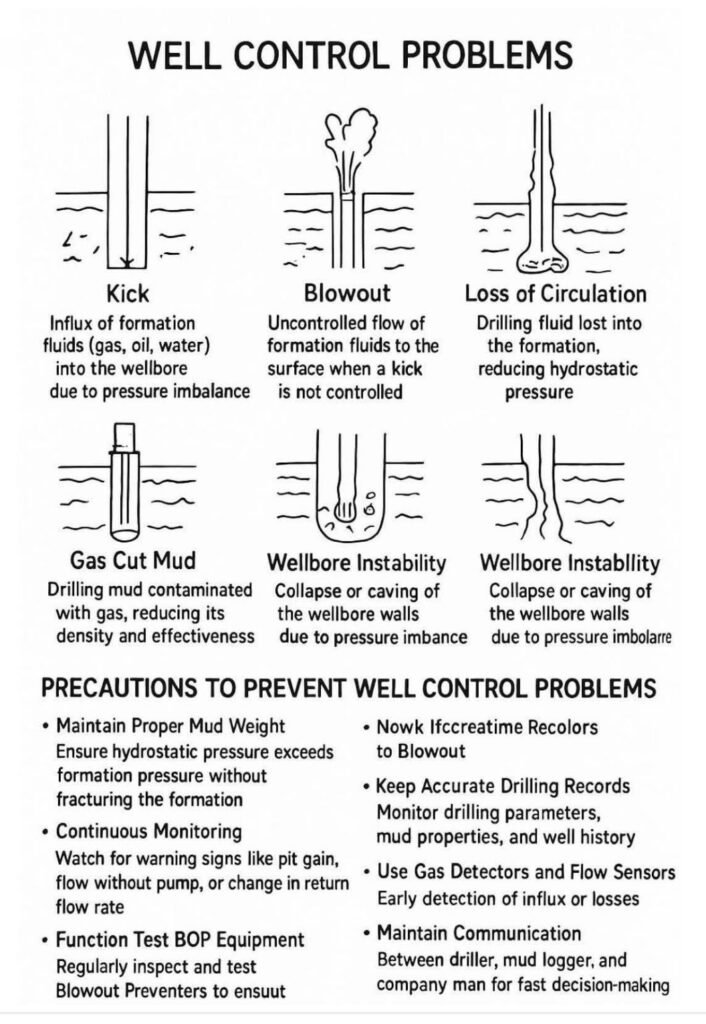
- Kick – Influx of formation fluids (gas, oil, water) into the wellbore due to pressure imbalance.
- Blowout – Uncontrolled flow of formation fluids to the surface when a kick is not controlled.
- Loss of Circulation – Drilling fluid lost into the formation, reducing hydrostatic pressure.
- Gas Cut Mud – Drilling mud contaminated with gas, reducing its density and effectiveness.
- Wellbore Instability – Collapse or caving of the wellbore walls due to pressure imbalance.
**Precautions to Prevent Well Control Problems
- Maintain Proper Mud Weight – Ensure hydrostatic pressure exceeds formation pressure without fracturing the formation.
- Continuous Monitoring – Watch for warning signs like pit gain, flow without pump, or change in return flow rate.
- Function Test BOP Equipment – Regularly inspect and test Blowout Preventers to ensure readiness.
- Proper Crew Training – Ensure all personnel are trained in well control procedures and kick detection.
- Slow Circulating Rate (SCR) – Record and use for kill operations.
- Close BOP Immediately on Kick Detection – Quick action prevents escalation to blowout.
- Keep Accurate Drilling Records – Monitor drilling parameters, mud properties, and well history.
- Use Gas Detectors and Flow Sensors – Early detection of influx or losses.
- Maintain Communication – Between driller, mud logger, and company man for fast decision-making