
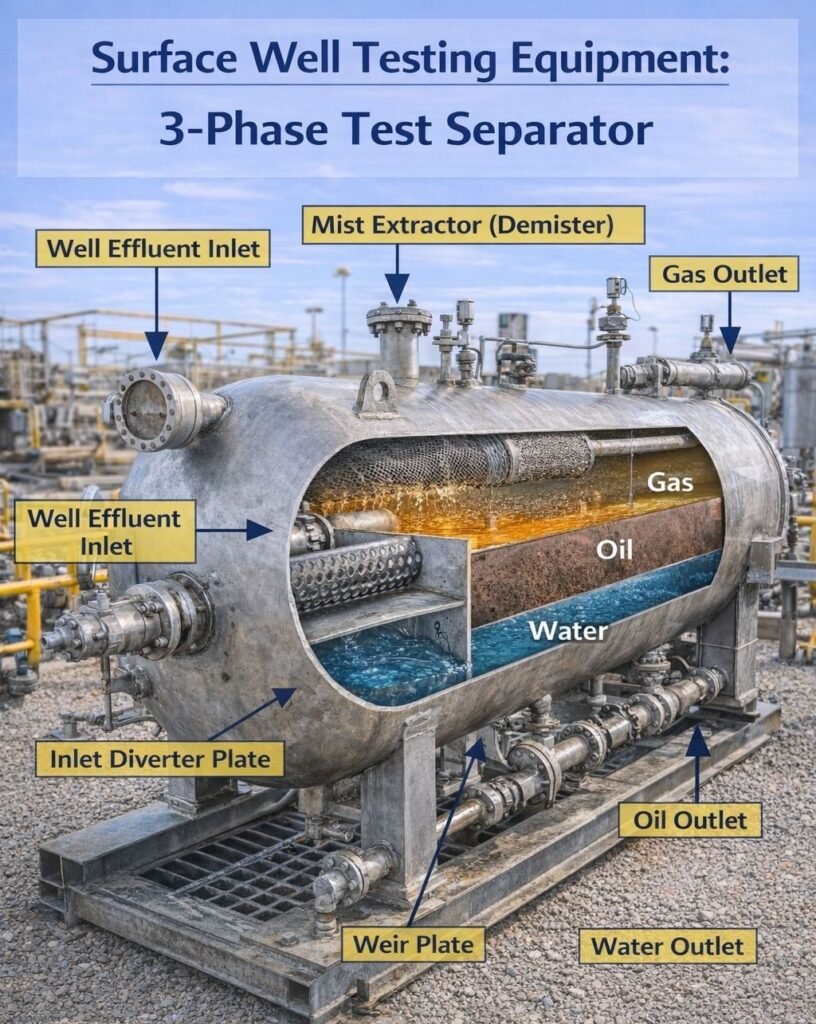
One of the most important piece of equipment I’ve been operating during surface well testing is the 3-phase test separator.
After the well stream passes through the choke and indirect heater, it enters the separator — and this is where the real measurement begins.
What it does?
The 3-phase separator is designed to separate the well effluent into:
-Gas
-Oil
-Water
This separation allows accurate measurement of each phase for proper well performance evaluation.
How it operates? (field understanding)
When the heated well stream enters the separator:
Inlet diverter plate slows the fluid and reduces momentum.
Gas rises to the top section.
Oil and water settle at the bottom due to density difference.
An internal weir plate helps separate oil from water.
A mist extractor (demister) removes liquid droplets from the gas before it exits.
Each phase is then directed to:
-Gas → gas line / flare
-Oil → surge tank
-Water → gauge tank or disposal line
Why it matters?
Without proper separation:
-Flow measurements become inaccurate
-Gas readings fluctuate
-Oil-water ratios cannot be trusted
-Final well test report becomes unreliable
The separator ensures the well test data reflects the true performance of the well.
What I’ve learned so far?
Being on location has shown me that separation is not just gravity — it is controlled using:
-Pressure control valves
-Level controllers
-Dump valves
-Gas back pressure valves
Well testing is not just flowing a well — it’s about measuring it correctly and safely.