
Overview
In the oil and gas industry, the separation of well fluids is a critical process. When crude oil is extracted from a well, it doesn’t come out as pure oil – it’s a complex mixture of oil, natural gas, water, and sometimes sand or other impurities. This is where 3-phase separators come into play.
What is a 3-Phase Separator?
A 3-phase separator is a specialized vessel designed to separate the well fluid into three distinct components: oil, gas, and water. These separators are commonly used in upstream oil & gas facilities, ensuring each phase is handled and processed efficiently before transportation or refining.
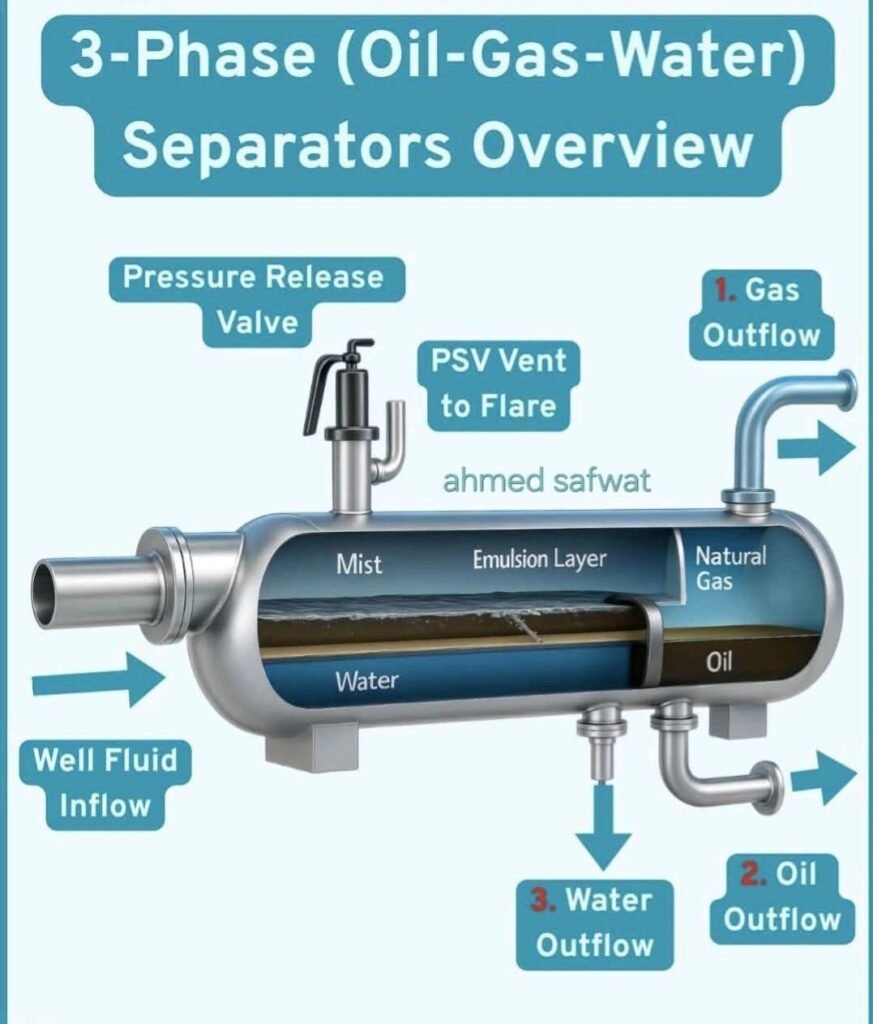
How It Works (as seen in the image):
- Well Fluid Inflow: The multiphase mixture enters the separator under pressure.Separation Begins:
Gas rises to the top and is collected for outflow or instrument use.
Oil settles above the heavier water layer.
Water collects at the bottom due to its higher density.
- Emulsion Layer: Between oil and water, an emulsion layer may form, which requires chemical or heat treatment to break down.
- Sand Detection: Sand and solid particles settle at the very bottom, which can be monitored and drained.
- Outflows:
Gas Outflow (Top outlet): Goes to flare or gas recovery.
Oil Outflow (Middle outlet): Sent for further processing.
Water Outflow (Bottom outlet): Treated or disposed of.
- PSV & Pressure Control: Pressure relief valves ensure safe operation by venting excess pressureKey Benefits:
Efficient separation of all three phases
Protects downstream equipment
Enhances safety and productivity
Reduces operating costs by minimizing processing load
Where They Are Used:
Onshore and offshore oil rigs
Early production facilities
Test separators during well testing
Processing stations in remote oil fields