
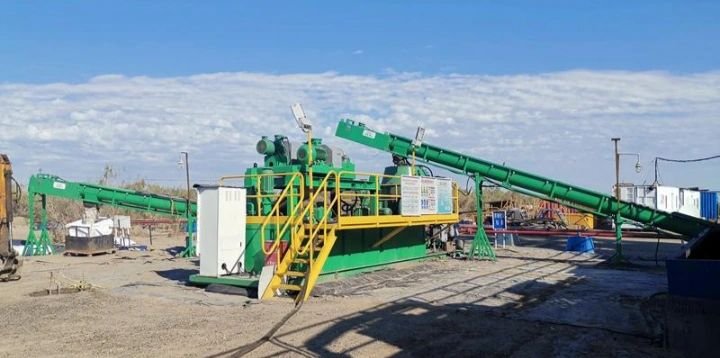
A properly rigged-up and well-managed solid control system can:
Improve drilling efficiency.
Reduce mud losses.
Extend equipment life.
Lower operational costs.
Improve safety and environmental compliance.
1.Start with the Right Rig-Up Philosophy
The goal of rig-up is to create a smooth, uninterrupted flow path for drilling fluid and cuttings
Before rigging up, ask:
Where will the mud return enter?
Is gravity working with or against the system?
Can equipment be maintained safely?
2.Position Equipment in the Correct Process Order
A common field mistake is treating equipment placement as a space issue rather than a process issue.
If the sequence is wrong, downstream equipment becomes overloaded and separation efficiency drops.
3.Flowline Design – The Most Overlooked Part
Many solid control problems are actually flowline problems.
Best Practices
Keep flowlines as short as practical.
Avoid unnecessary bends.
Maintain proper slope for gravity flow.
4.Level and Align the Equipment
This is where experienced field engineers stand out.
Shale Shakers:
Ensure the deck is level.
Verify spring condition.
Check vibration direction.
Confirm proper screen installation.
Centrifuges:
Check skid level.
Verify bowl alignment.
Ensure feed pump alignment.
Inspect vibration mounts.
Auger Conveyors:
Align screw and bearings.
Check gearbox position.
Ensure proper discharge angle.
5.Manage Cuttings Handling from Day One
A good engineer plans:
Auger routing.
Skip placement.
VCD discharge direction.
Access for trucks or cranes.
Spill containment.
Maintain clear access for removal operations.
Poor cuttings handling creates housekeeping, safety, and environmental problems very quickly
6.Electrical Rig-Up
Critical Checks.
Tighten all terminals.
Verify correct voltage.
Check motor rotation.
Test emergency stops.
Inspect cable routing.
Confirm grounding.
Pay special attention to:
Contactors.
Push buttons.
VFD panels.
7.Commission the System Properly
One of the biggest mistakes is starting drilling without a full system test.
Run Water or Mud Through the System.
Check:
Shaker overflow.
Hydrocyclone discharge.
Pump suction pressure.
Tank levels.
Centrifuge feed stability.
Auger operation.
VCD discharge.
8.Daily Management Once Operations Start
Rig-up is only half the job.
Every Shift, Check:
Shaker screens
Tears, blinding, proper tension, and correct API size.
Centrifuge
Vibration, temperature, feed consistency, and discharge dryness.
Pumps & Augers
Leaks, bearing noise, chain tension, and solids buildup.
In my experience, wrong screen selection is the fastest way to overload an entire solid control system.
Successful solid control operations are built on planning, correct rig-up, and disciplined daily management.