
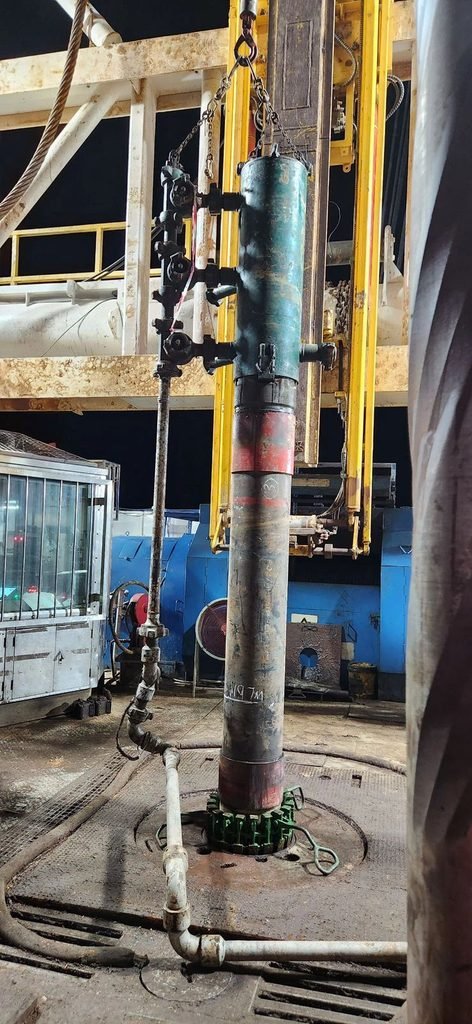
The more time I spend in cementing operations,the more I realize that successful well cementing isn’t just about pumping slurry—it’s about understanding everything that happens before,during and after the cement job.
Some of the areas that separate average cementers from exceptional ones include:
- Understanding drilling mud properties — rheology, PV, YP, gel strengths, density, solids content, filtration,ECD and hole cleaning.
- Mastering hydraulics — annular velocity, friction pressure, pressure losses, Reynolds number, flow regime, bottom-hole circulating pressure, spacer design and ECD.
- Appreciating the mechanical side of cementing. Many failures are caused by poor displacement and inadequate mud removal rather than the cement itself.
• Understanding laboratory testing—thickening time, fluid loss, free fluid, sedimentation, rheology, static gel strength, compressive strength, and UCA testing.
- Being able to interpret cement evaluation logs to continuously improve future jobs.
Becoming a great cementing supervisor requires much more than knowing how to mix and pump cement. It demands a solid understanding of drilling,hydraulics, wellbore mechanics,laboratory testing and continuous learning.