
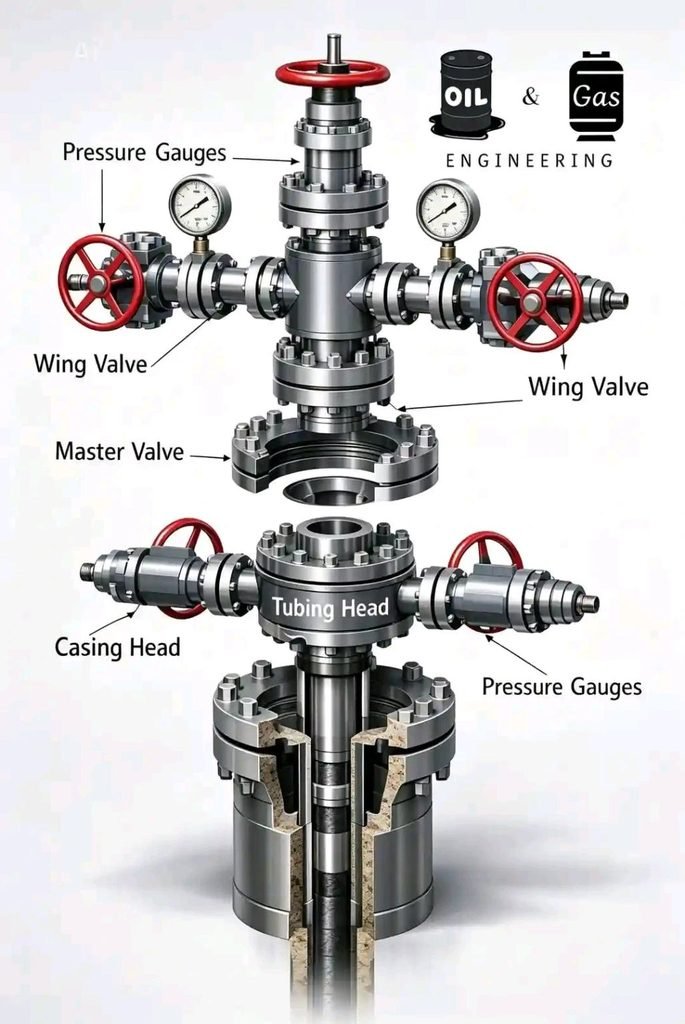
This image shows a wellhead assembly used in oil and gas engineering, specifically a setup commonly called a Christmas tree. It’s installed at the top of an oil or gas well to control the flow of fluids coming out of the ground.
Main Components (from top to bottom)
- Upper Valve (Tree Valve)
The top vertical valve controls the main flow of oil/gas upward.
Often used to shut in the well completely.
- Pressure Gauges
The round dial instruments on both sides.
Measure the pressure inside the well and flow lines.
Critical for safety and monitoring.
- Wing Valves (Left & Right)
Located on the horizontal arms.
Control flow to pipelines or testing equipment.
One side may lead to production, the other to testing or injection.
- Master Valve
Positioned below the wing valves on the vertical section.
Acts as the primary shut-off valve for the well.
Usually kept open during operation and closed only in emergencies or maintenance.
- Tubing Head
Connects the surface equipment to the production tubing inside the well.
Supports the tubing string and provides sealing.
- Casing Head
Located below the tubing head.
Supports the casing (outer pipe layers of the well).
Provides pressure control between casing layers.
What It Does
Controls flow of oil/gas from the reservoir
Monitors pressure for safe operation
Allows shutdown in case of emergency
Directs fluids to pipelines or storage
Simple Way to Think About It
It’s like a control hub with valves and gauges sitting on top of a well, letting engineers:
Open or close the flow
Measure pressure
Safely manage production