
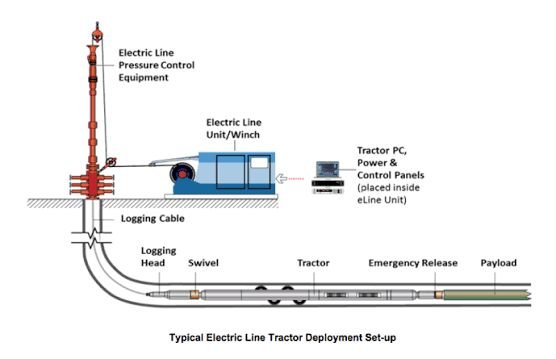
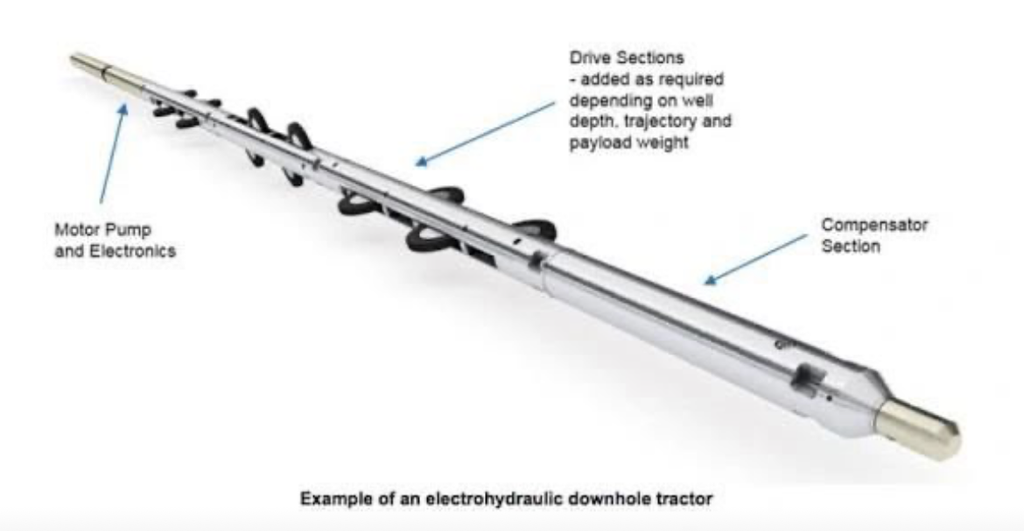
It is a motorized tool used in the oil and gas industry to convey equipment into highly deviated or horizontal wellbores. In these wells, gravity alone is not strong enough to pull a tool string, so a downhole tractor provides the necessary tractive force to push or pull wireline-conveyed equipment to the desired depth. This method is a more cost-effective, precise, and less intrusive alternative to using coiled tubing or drill pipe.
How downhole tractors work
There are two primary types of mechanisms used by downhole tractors:
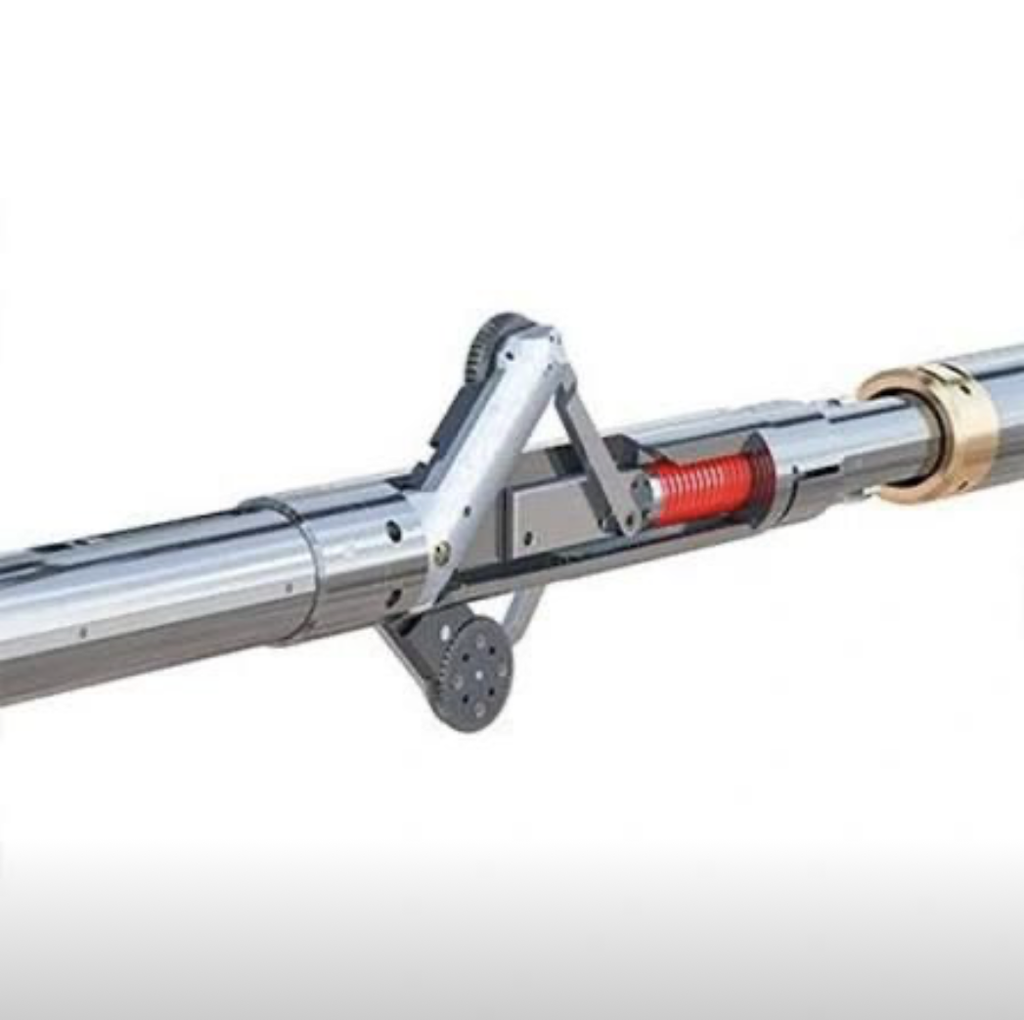
Wheeled tractors: These systems use wheels that extend to grip the inner wall of the wellbore casing. An electric motor (powered by an electric line from the surface) or a hydraulic motor (powered by a pump at the surface) rotates the wheels to propel the tool string forward.
Inchworm (crawler) tractors: These devices use an anchor-and-reciprocating system to move through the wellbore. The tool extends an anchor to secure itself against the pipe wall, extends its body forward, then releases the anchor and re-anchors itself to repeat the process.
Both types of tractors are controlled remotely by an operator at the surface.
Applications
Downhole tractors are used in a variety of well intervention and completion applications:
Well logging: Conveying well logging tools into the deviated section of a well to gather crucial data about the wellbore.
Perforating: Carrying perforating guns to the correct depth to create flow paths from the reservoir into the well.
Completion: Deploying completion tools like packers and plugs in deep, horizontal sections.
Wellbore cleanout: Running cleaning, milling, and sand bailing tools to remove debris and restrictions.
Production enhancement: Manipulating downhole components such as sliding sleeves and control valves.
Fishing: Providing access and recovery of lost equipment in the wellbore.