
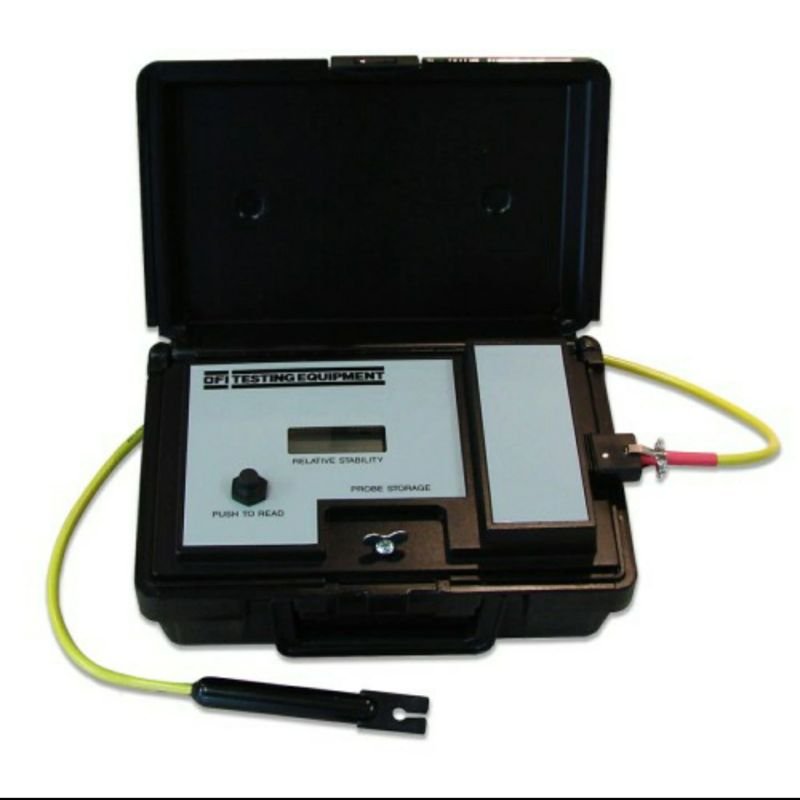
When working with oil-based drilling fluids, one important question mud engineers ask is:
How stable is the emulsion?
Oil-based muds are made up of oil, water, emulsifiers, and other additives. For the system to perform properly, the water phase must remain well dispersed within the oil phase.
This is where Electrical Stability (ES) comes in.
Electrical Stability is a measurement used to evaluate the strength and stability of the oil–water emulsion in oil-based drilling fluids.
Mud engineers measure this using a tool called the ES Meter.
During the test:
- Electrodes are placed in the mud sample
- Electrical voltage is gradually increased
- The voltage at which the emulsion breaks down is recorded as the ES value
Generally:
- Higher ES values indicate a stronger and more stable emulsion
- Lower ES values may suggest poor emulsion stability or contamination
Maintaining proper electrical stability helps ensure that oil-based mud systems maintain their desired rheology, filtration control, and overall performance.
Professional insight:
Mud engineers working with oil-based mud systems, what ES values do you typically consider acceptable during drilling operations?
Food for Thought:
What do you think might happen if the emulsion in an oil-based mud becomes unstable during drilling?
30 Days of Mud Engineering-Day 1-What Is Drilling
30 Days of Mud Engineering-Day 2-What Is Drilling Fluid
30 Days of Mud Engineering-Day 3-How Does Drilling Fluid Control Formation Pressure
30 Days of Mud Engineering-Day 4-How Do Engineers Determine The Right Mud Weight for a Formation
30 Days of Mud Engineering-Day 6-Mud Weight
30 Days of Mud Engineering-Day 7-Why Must Drilling Mud Flow Properly
30 Days of Mud Engineering-Day 8-What Determines How Drilling Mud Actually Flows Inside The Wellbore
30 Days of Mud Engineering-Day 9-Plastic Viscosity (PV) and Yield Point (YP)
30 Days of Mud Engineering-Day 10-Fluid Loss or Filtration
30 Days of Mud Engineering-Day 11-Retort Test
30 Days of Mud Engineering-Day 12-How Stable Is The Emulsion
30 Days of Mud Engineering-Day 13-Water-Based Mud (WBM) and Oil-Based Mud (OBM)
30 Days of Mud Engineering-Day 14-Shale
30 Days of Mud Engineering-Day 15-Shale Inhibition
30 Days of Mud Engineering-Day 16-KCl–Polymer Mud
30 Days of Mud Engineering-Day 17-What Happens to All the Solids Generated During Drilling
30 Days of Mud Engineering-Day 18-How Do Mud Engineers Remove Unwanted Solids From Drilling Fluid
30 Days of Mud Engineering-Day 19-How Do Mud Engineers Maintain The Right Mud Weight During Drilling
30 Days of Mud Engineering-Day 20-Hole Cleaning
30 Days of Mud Engineering-Day 21-Stuck Pipe (Very High Engagement Topic)
30 Days of Mud Engineering-Day 22-Lost Circulation
30 Days of Mud Engineering-Day 23-Lost Circulation Materials (LCM)
30 Days of Mud Engineering-Day 24-Barite Sag
30 Days of Mud Engineering-Day 25-Gas Contamination
30 Days of Mud Engineering-Day 26-Downhole Temperature Impact On the Drilling Fluids
30 Days of Mud Engineering-Day 27-What Is The Role Of A Mud Engineer
30 Days of Mud Engineering-Day 28-How Dynamic The Role of Mud Engineer
30 Days of Mud Engineering-Day 29-What Skills Are Essential For A Mud Engineer