
When drilling through formations, not all rocks behave the same way.
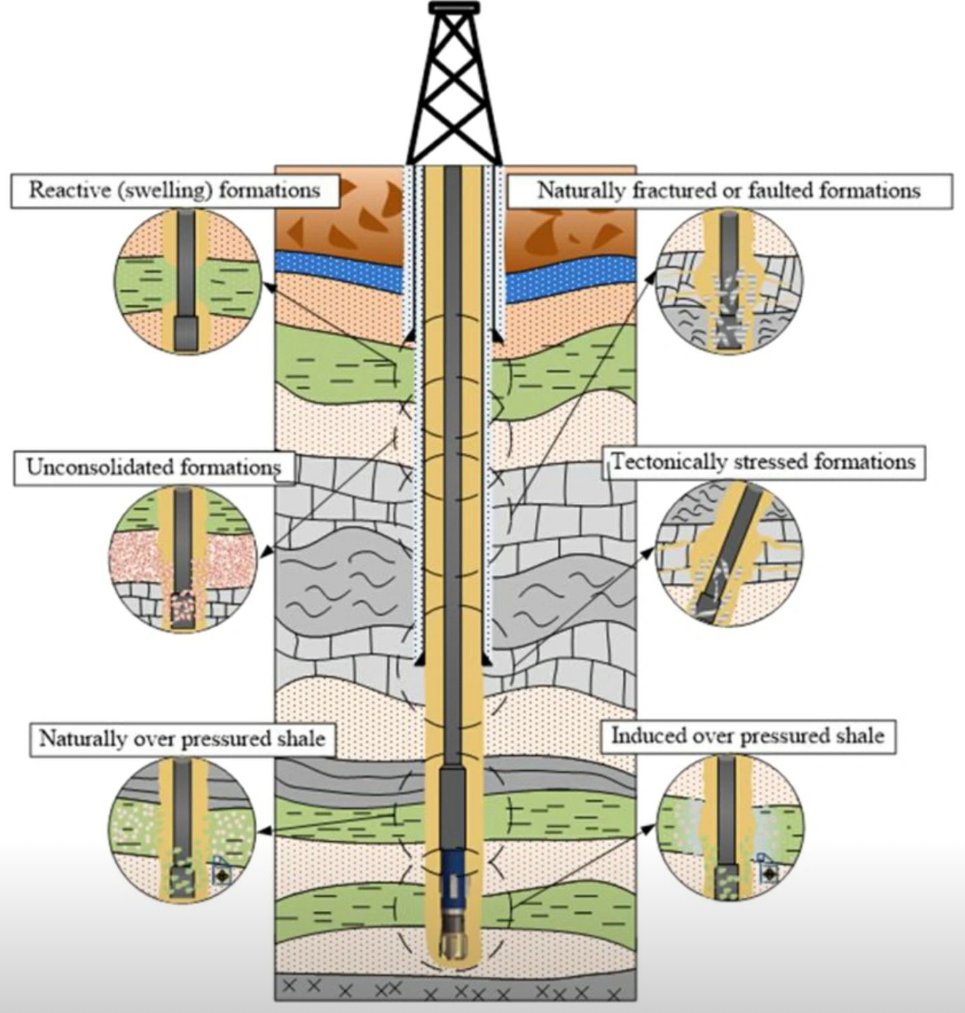
Some formations remain stable when exposed to drilling fluids, while others can react and become unstable.
One of the most common problematic formations encountered during drilling is shale.
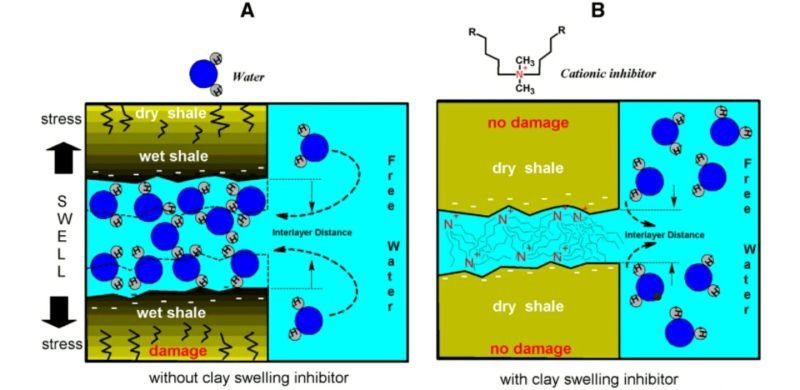
Shale is a fine-grained sedimentary rock that often contains clay minerals. These clay particles have the ability to interact with water.
When water from drilling fluids enters certain shale formations, the clay minerals may begin to absorb water and swell.
This reaction can lead to several drilling problems, including:
- Wellbore instability
- Sloughing or collapsing shale
- Tight hole conditions
- Stuck pipe
In other cases, shale may begin to disperse or break apart, introducing unwanted solids into the drilling fluid system.
These challenges make shale one of the most critical formations that mud engineers must manage during drilling operations.
Understanding how shale interacts with drilling fluids helps engineers design mud systems that minimize formation reactions and maintain wellbore stability.
Professional insight:
Mud engineers and drilling professionals — what shale-related drilling challenges do you most frequently encounter in the field?
Food for Thought:
If shale reacts with water-based drilling fluids, how do engineers design mud systems to prevent this interaction?
30 Days of Mud Engineering-Day 1-What Is Drilling
30 Days of Mud Engineering-Day 2-What Is Drilling Fluid
30 Days of Mud Engineering-Day 3-How Does Drilling Fluid Control Formation Pressure
30 Days of Mud Engineering-Day 4-How Do Engineers Determine The Right Mud Weight for a Formation
30 Days of Mud Engineering-Day 6-Mud Weight
30 Days of Mud Engineering-Day 7-Why Must Drilling Mud Flow Properly
30 Days of Mud Engineering-Day 8-What Determines How Drilling Mud Actually Flows Inside The Wellbore
30 Days of Mud Engineering-Day 9-Plastic Viscosity (PV) and Yield Point (YP)
30 Days of Mud Engineering-Day 10-Fluid Loss or Filtration
30 Days of Mud Engineering-Day 11-Retort Test
30 Days of Mud Engineering-Day 12-How Stable Is The Emulsion
30 Days of Mud Engineering-Day 13-Water-Based Mud (WBM) and Oil-Based Mud (OBM)
30 Days of Mud Engineering-Day 14-Shale
30 Days of Mud Engineering-Day 15-Shale Inhibition
30 Days of Mud Engineering-Day 16-KCl–Polymer Mud
30 Days of Mud Engineering-Day 17-What Happens to All the Solids Generated During Drilling
30 Days of Mud Engineering-Day 18-How Do Mud Engineers Remove Unwanted Solids From Drilling Fluid
30 Days of Mud Engineering-Day 19-How Do Mud Engineers Maintain The Right Mud Weight During Drilling
30 Days of Mud Engineering-Day 20-Hole Cleaning
30 Days of Mud Engineering-Day 21-Stuck Pipe (Very High Engagement Topic)
30 Days of Mud Engineering-Day 22-Lost Circulation
30 Days of Mud Engineering-Day 23-Lost Circulation Materials (LCM)
30 Days of Mud Engineering-Day 24-Barite Sag
30 Days of Mud Engineering-Day 25-Gas Contamination
30 Days of Mud Engineering-Day 26-Downhole Temperature Impact On the Drilling Fluids
30 Days of Mud Engineering-Day 27-What Is The Role Of A Mud Engineer
30 Days of Mud Engineering-Day 28-How Dynamic The Role of Mud Engineer
30 Days of Mud Engineering-Day 29-What Skills Are Essential For A Mud Engineer