
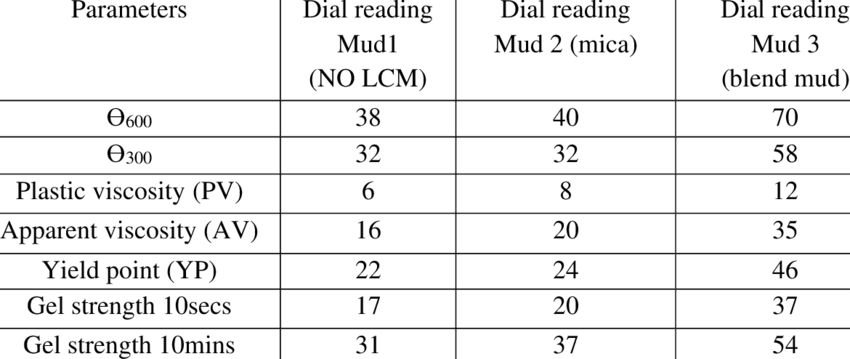
Yesterday we talked about rheology and how engineers use a viscometer to study how drilling fluids flow.
But what do the results from the viscometer actually tell us?
Two key parameters mud engineers often look at are Plastic Viscosity (PV) and Yield Point (YP).
These values help describe how drilling mud behaves while circulating in the well.
Plastic Viscosity (PV) reflects the internal resistance of the drilling fluid to flow.
In simple terms, it is influenced mainly by the solids content and the thickness of the fluid.
Higher PV can indicate:
- Increased solids in the mud
- Higher resistance to flow
Yield Point (YP), on the other hand, represents the ability of the drilling fluid to carry cuttings to the surface.
It indicates how effectively the fluid can lift and transport drilled solids from the wellbore.
Together, PV and YP help engineers evaluate hole cleaning efficiency and drilling performance.
During my training, interpreting viscometer readings helped me better understand how adjustments to drilling fluid properties can influence well operations.
Food for Thought:
What do you think might happen if the drilling fluid has a very high PV but a very low YP?
30 Days of Mud Engineering-Day 1-What Is Drilling
30 Days of Mud Engineering-Day 2-What Is Drilling Fluid
30 Days of Mud Engineering-Day 3-How Does Drilling Fluid Control Formation Pressure
30 Days of Mud Engineering-Day 4-How Do Engineers Determine The Right Mud Weight for a Formation
30 Days of Mud Engineering-Day 6-Mud Weight
30 Days of Mud Engineering-Day 7-Why Must Drilling Mud Flow Properly
30 Days of Mud Engineering-Day 8-What Determines How Drilling Mud Actually Flows Inside The Wellbore
30 Days of Mud Engineering-Day 9-Plastic Viscosity (PV) and Yield Point (YP)
30 Days of Mud Engineering-Day 10-Fluid Loss or Filtration
30 Days of Mud Engineering-Day 11-Retort Test
30 Days of Mud Engineering-Day 12-How Stable Is The Emulsion
30 Days of Mud Engineering-Day 13-Water-Based Mud (WBM) and Oil-Based Mud (OBM)
30 Days of Mud Engineering-Day 14-Shale
30 Days of Mud Engineering-Day 15-Shale Inhibition
30 Days of Mud Engineering-Day 16-KCl–Polymer Mud
30 Days of Mud Engineering-Day 17-What Happens to All the Solids Generated During Drilling
30 Days of Mud Engineering-Day 18-How Do Mud Engineers Remove Unwanted Solids From Drilling Fluid
30 Days of Mud Engineering-Day 19-How Do Mud Engineers Maintain The Right Mud Weight During Drilling
30 Days of Mud Engineering-Day 20-Hole Cleaning
30 Days of Mud Engineering-Day 21-Stuck Pipe (Very High Engagement Topic)
30 Days of Mud Engineering-Day 22-Lost Circulation
30 Days of Mud Engineering-Day 23-Lost Circulation Materials (LCM)
30 Days of Mud Engineering-Day 24-Barite Sag
30 Days of Mud Engineering-Day 25-Gas Contamination
30 Days of Mud Engineering-Day 26-Downhole Temperature Impact On the Drilling Fluids
30 Days of Mud Engineering-Day 27-What Is The Role Of A Mud Engineer
30 Days of Mud Engineering-Day 28-How Dynamic The Role of Mud Engineer
30 Days of Mud Engineering-Day 29-What Skills Are Essential For A Mud Engineer