
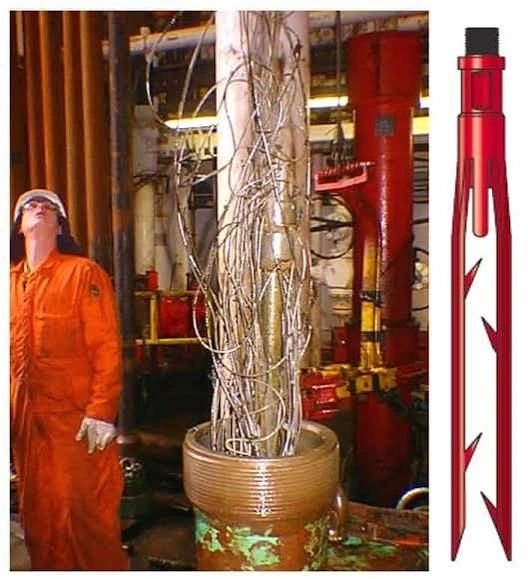
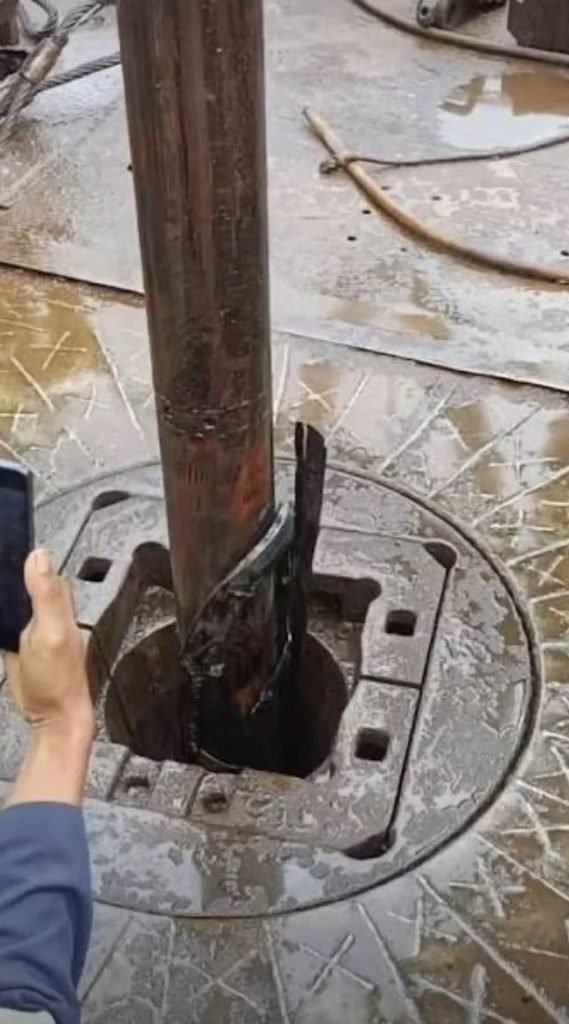
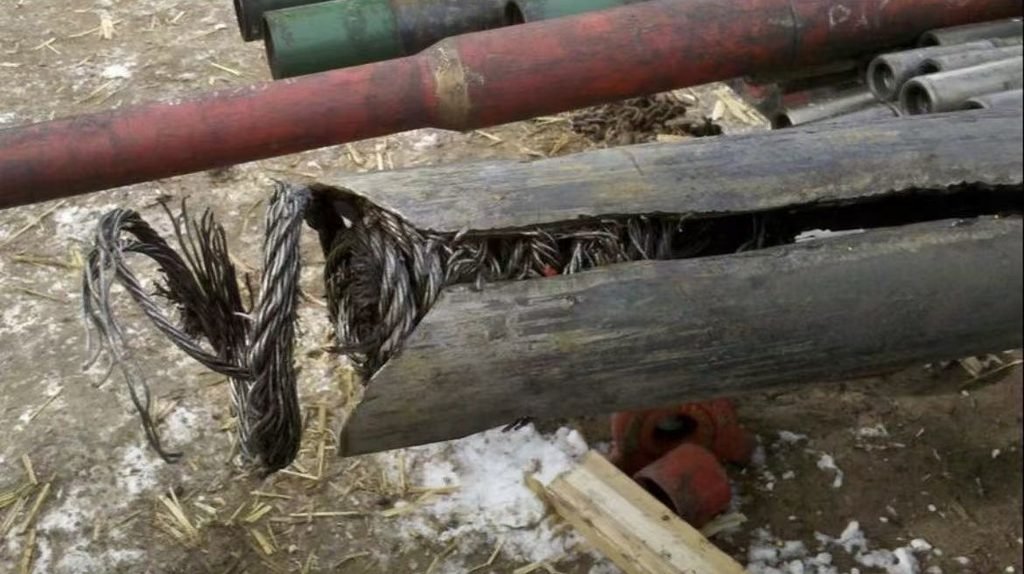
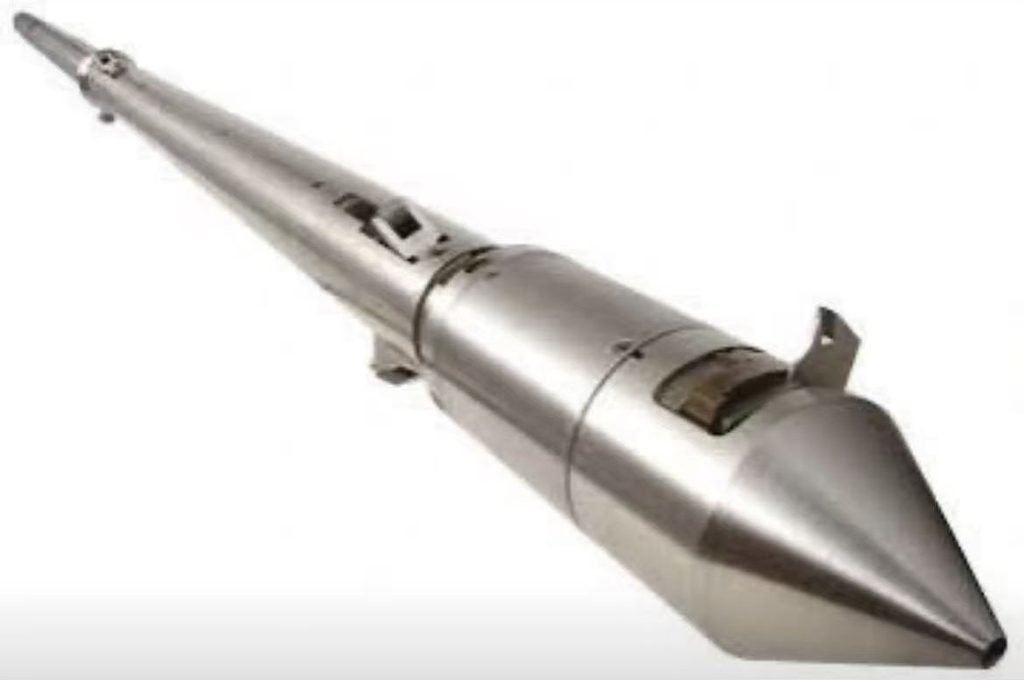
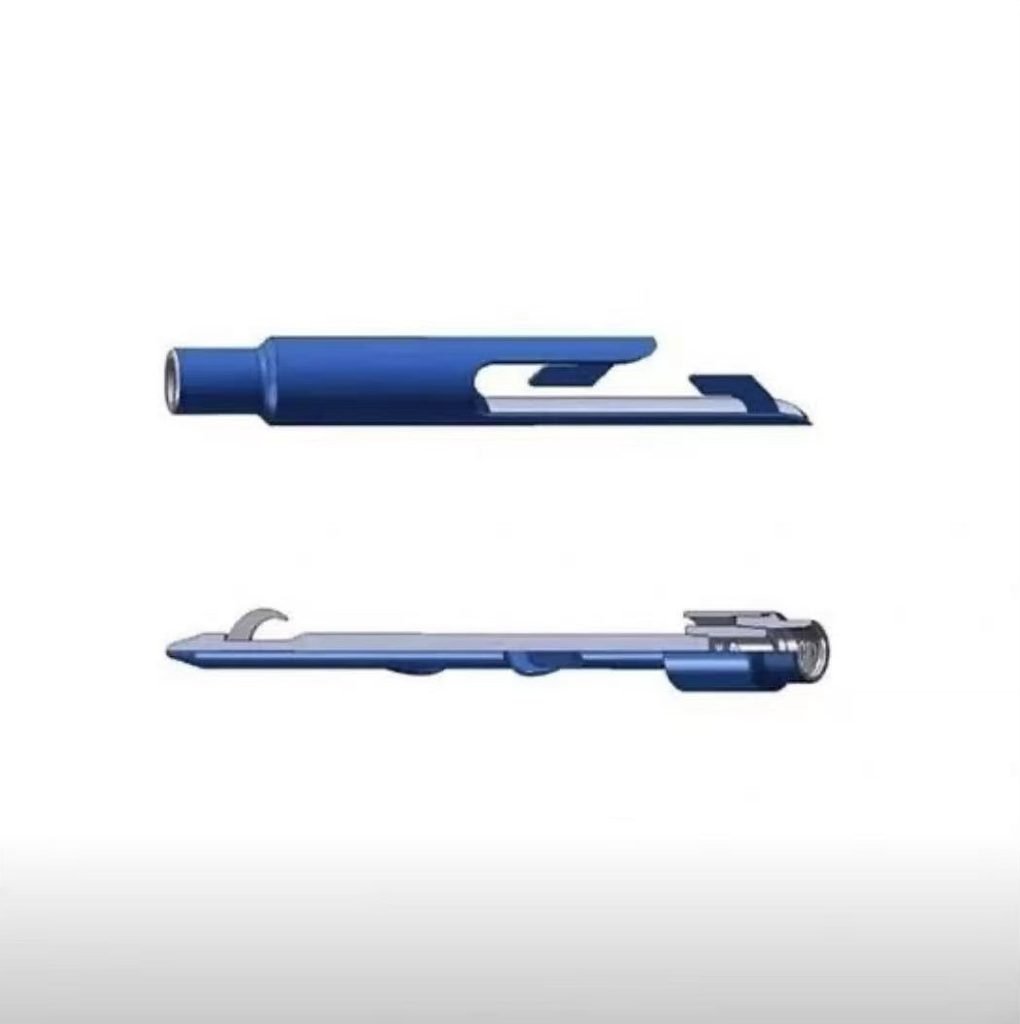
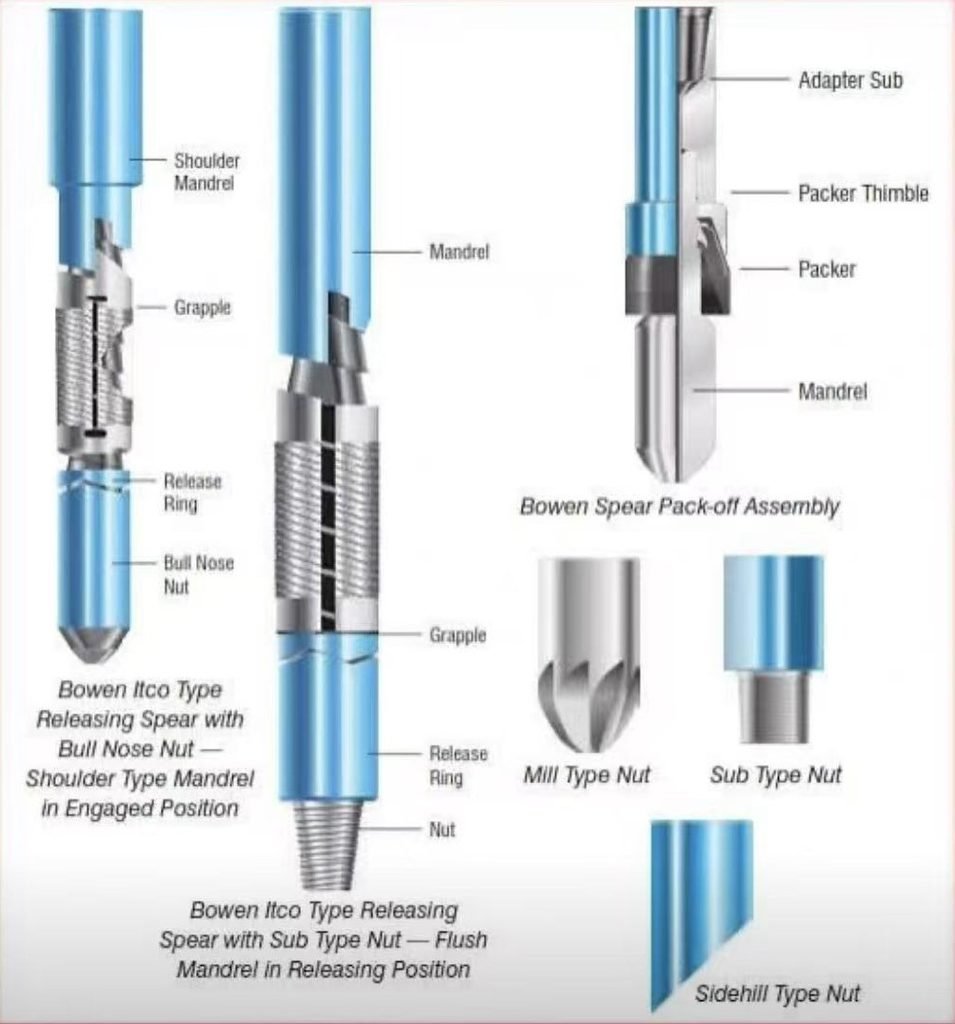
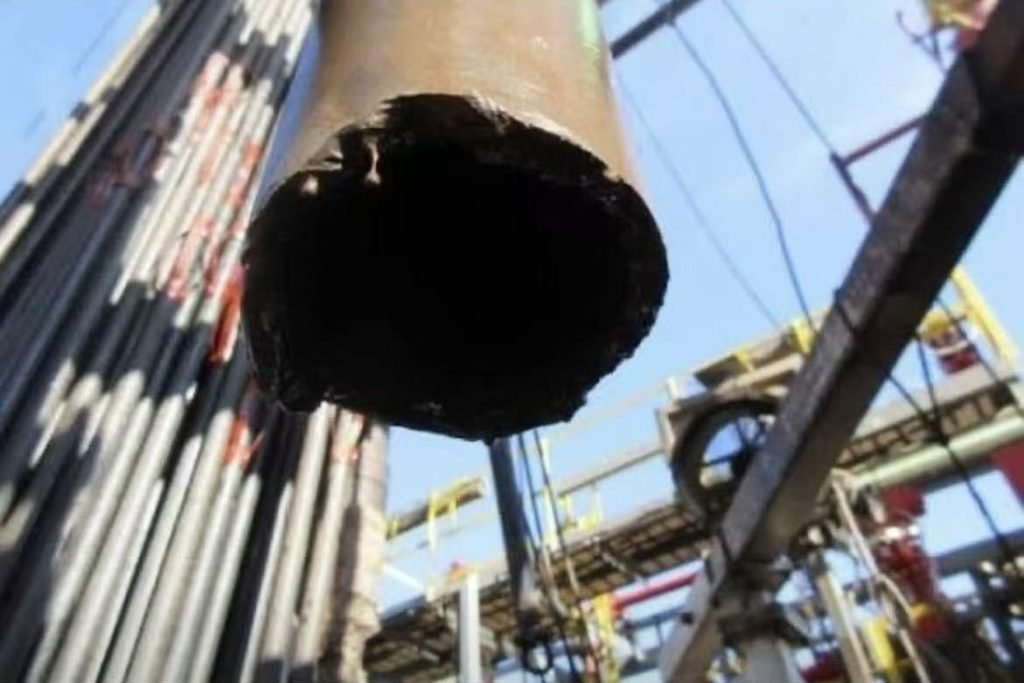
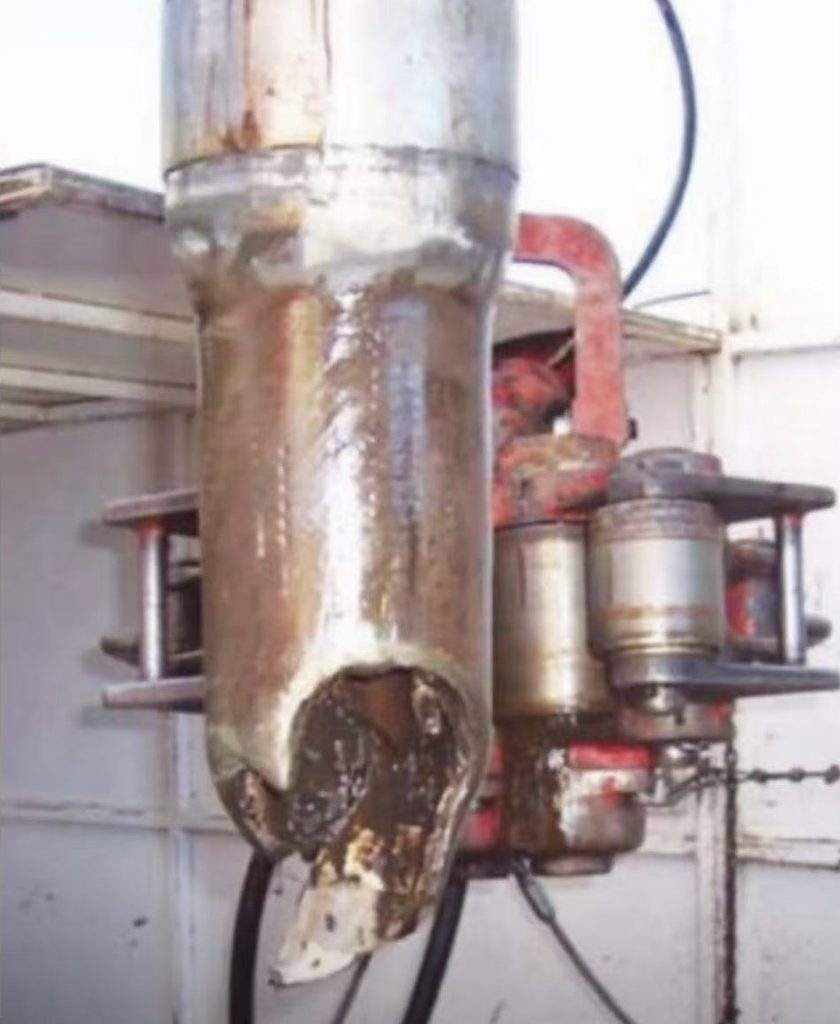
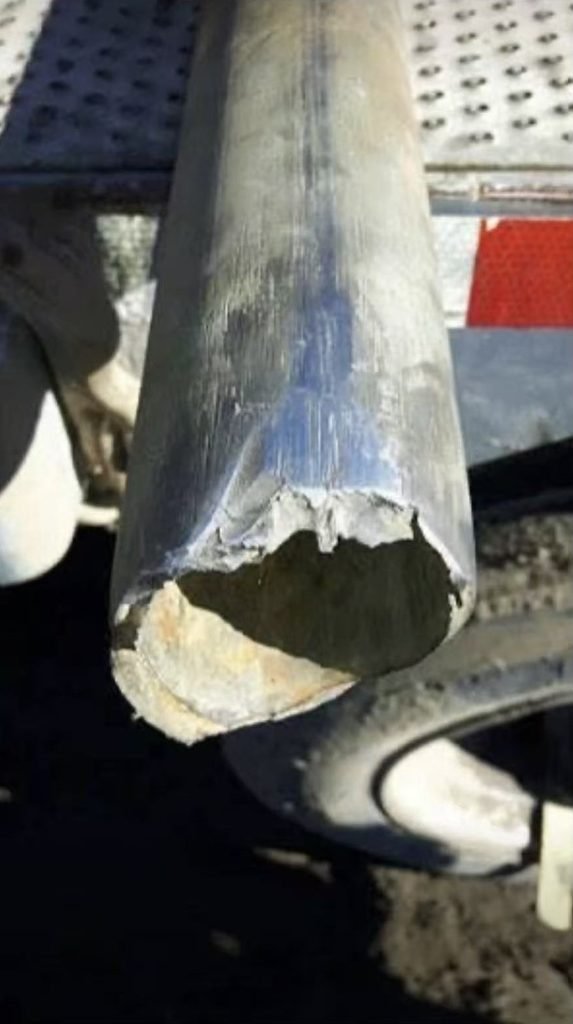
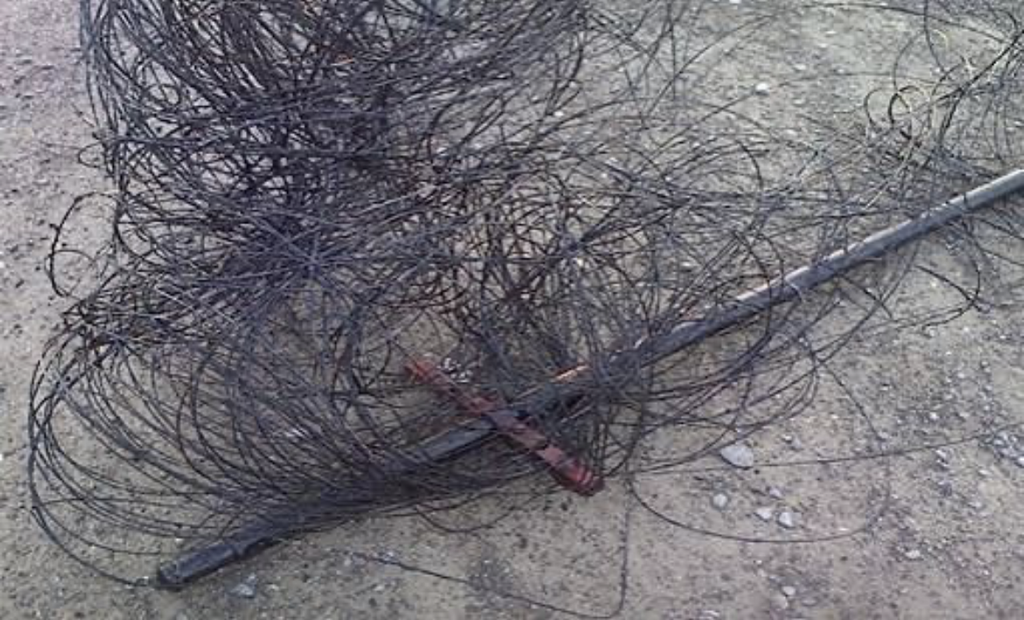
Fishing Operations are the process of retrieving equipment that becomes stuck or accidentally falls into the wellbore, such as:
- Drill Collars (Weight Pipes)
- Drill Pipes
- Hammers
- Hammer Cones
- Other metallic objects accidentally dropped during drilling or workover operations.
The following factors must be considered before carrying out a fishing operation:
- The condition of the well.
- The relationship between the wellbore and the fish (the object to be retrieved).
- The method by which the fish will be retrieved.
The main causes of fishing operations are:
- Heavy or Sloughing Shales:
In many cases, when the drilling mud weight is insufficient to balance the pressure of shale formations, the shale collapses into the wellbore, causing the drill collars to become stuck. A steep shale formation may also collapse, resulting in stuck pipe. - Dog Legs:
A Dog Leg is a significant deviation of the wellbore from the vertical. This usually occurs when drilling transitions from a hard formation to a softer one. Initially, this deviation does not create a problem because the drill collars above the bit have a uniform diameter. However, once all the drill collars pass through this section, the drill pipe is forced against the wellbore wall, creating what is known as a Key Seat. During pull-out, the Tool Joint, which has a larger outside diameter than the Key Seat, becomes stuck. - Accumulation of Rock Cuttings Inside the Well:
When drilling mud properties are poor, circulation rates are low, and the rate of penetration is high, rock cuttings accumulate around the drill collars, causing the drill string to become stuck. - Formation of a Thick Mud Cake:
If drilling operations stop for any reason, it is recommended to pull the drill string back to the Casing Shoe to reduce the possibility of pipe sticking due to the formation of a Mud Cake, especially in highly permeable formations where fluid loss from the drilling mud creates a thick mud cake on the wellbore wall. - Differential Sticking:
Differential sticking occurs due to the pressure imbalance between the drilling mud column and the formation pressure, forcing the drill string against the wellbore wall and causing it to become stuck.
Formations Where Fishing Problems Are Most Common:
- Soft formations such as Dammam and Al-Hartha, where mud losses lead to the accumulation of rock cuttings around the hammer or drill collars, increasing the risk of stuck pipe.
- Formations containing Marl, Clay, Marly Limestone, and Salt, such as Sheranish, which may swell due to insufficient mud pressure, resulting in pipe sticking.
- Formations containing Sulfurous Water, such as Tayyarat, which accelerate the corrosion of drill pipes and downhole equipment.