
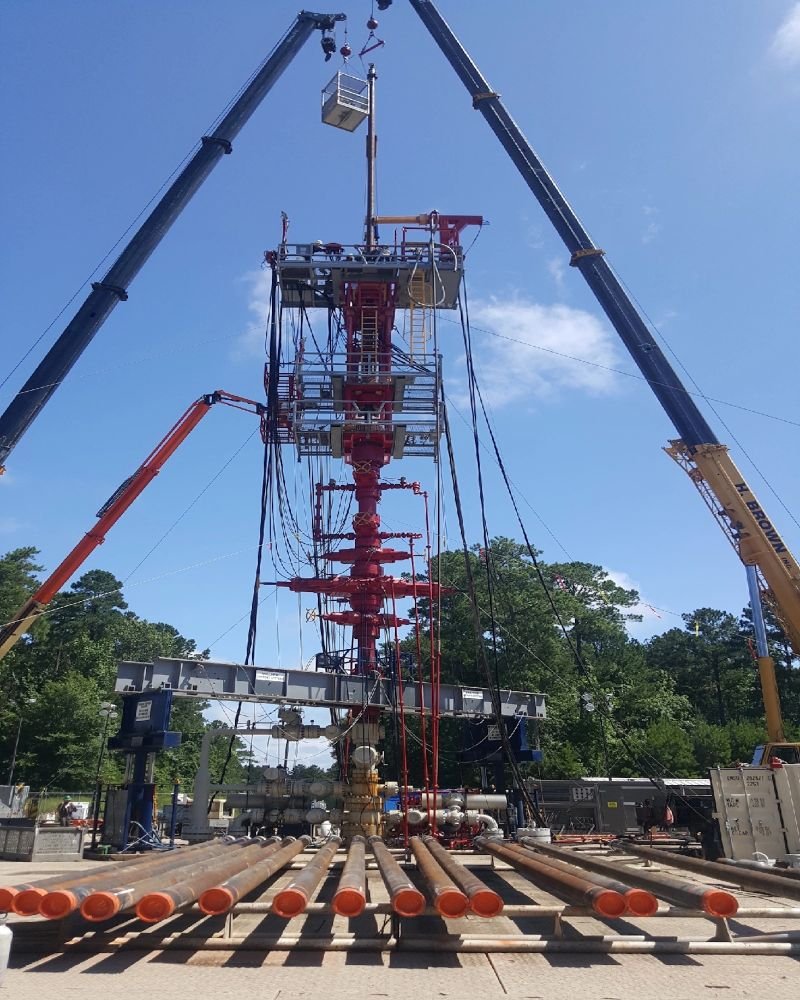
How can a workstring change from pipe light, to pipe heavy, and suddenly snap back to pipe light under pressure?
This is a classic snubbing challenge when running a tapered workstring. Here is the physics behind the shift and how to anticipate it.
The Balance Point Physics:
String condition is a battle between downward buoyant weight and upward hydraulic lift [F(up) = P(wh) x A(pipe)]. The balance point occurs when these forces neutralize.
The Tapered String Phases:
- Initial Run (Pipe Light): Small OD pipe is light. Upward force exceeds string weight. You must actively snub (push) the pipe into the wellbore.
- Passing the Balance Point (Pipe Heavy): As string weight accumulates, downward force overtakes upward lift. The pipe now falls under its own weight, and you shift to stripping using heavy slips.
- The Crossover (Back to Pipe Light): Here is the trap. When the larger OD pipe enters the well, its larger cross-sectional area causes a massive, instantaneous spike in upward hydraulic force. In a split second, this new upward force exceeds the total string weight, snapping you back to a pipe light condition.
Operational Considerations
Failing to anticipate this crossover can result in a blown-out string. Crews must ensure:
Accurate Math: Calculate exactly where the first balance point hits, and the precise upward force jump when the larger OD pipe enters the BOP.
Slip Management: Be prepared to seamlessly transition the load back to the snubbing slips before the upward thrust ejects the string.
Equipment Sizing: Properly configure BOPs and stripper rubbers to handle the step-change in OD without losing the pressure seal.
Mastering snubbing means respecting the relationship between pressure, area, and weight at every connection.