
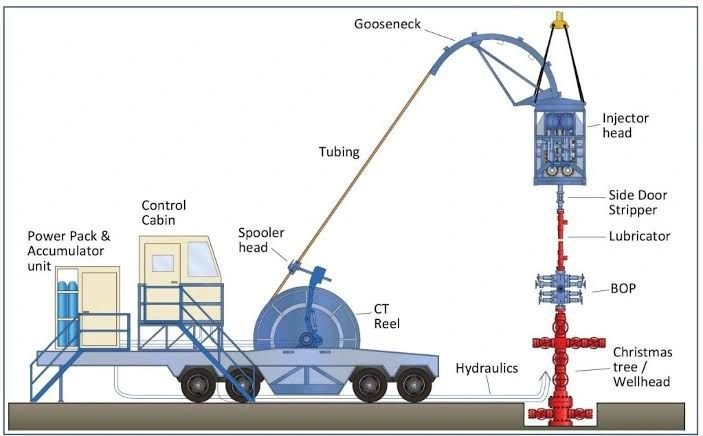
Here are primarily focused on digitalization, the integration of smart sensors, material improvements, and the development of innovative tools to expand operational capabilities in increasingly complex wells.
Here are the major advancements:
Digitalization and Smart Tools: Coiled tubing is increasingly equipped with integrated sensors and data collection capabilities (becoming “distributed sensors”). This enables real-time monitoring of parameters such as temperature, pressure, and orientation directly from the wellhead. This real-time data acquisition optimizes operations and allows for immediate adjustments.
Automation and Data Analytics: The industry is moving toward greater automation and data analytics to improve the accuracy and efficiency of CT operations. This includes automated control systems for tubing insertion and removal.
Materials Improvements: The development of more durable and higher-performing coiled tubing increases the efficiency and reliability of these systems, enabling them to withstand harsher environments (high pressures and temperatures) and reach greater depths.
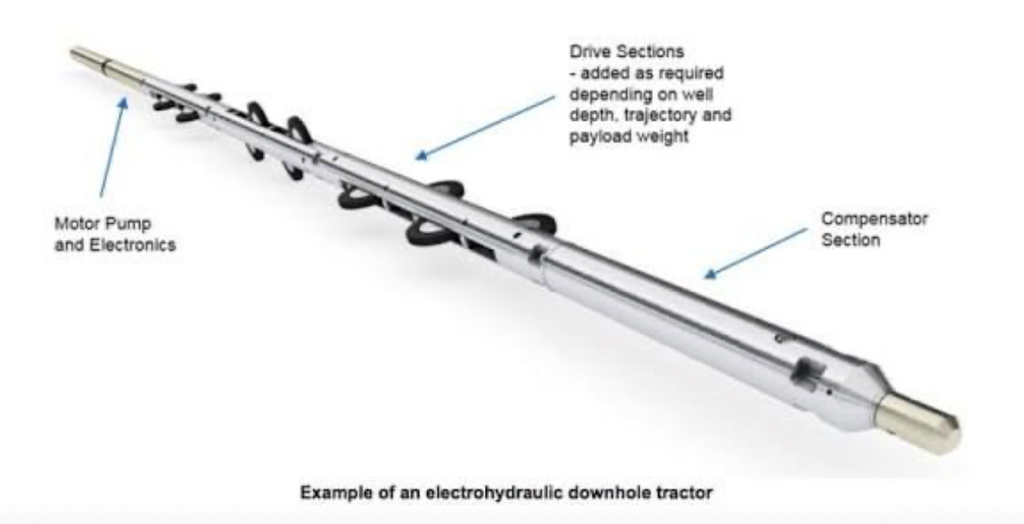
Downhole Tractors: Innovations in tractor technology extend CT accessibility to very long horizontal wells, overcoming the friction and buckling problems that previously limited lateral reach.
Extended Well Operations: CT capabilities are being pushed to meet the challenges of unconventional wells (shale gas, etc.) with increasingly long side sections (sometimes exceeding 15,000 feet), particularly for hydraulic fracturing or plug mill-out operations.
Increased application versatility: In addition to traditional interventions (cleaning, stimulation, corrosion inhibition), CT is now used for well completions incorporating electric submersible pumps (ESPs) and for underbalanced drilling, which maximizes penetration rates and reduces formation damage.
These technologies aim to make CT interventions safer, more efficient, more cost-effective, and to minimize production downtime.