
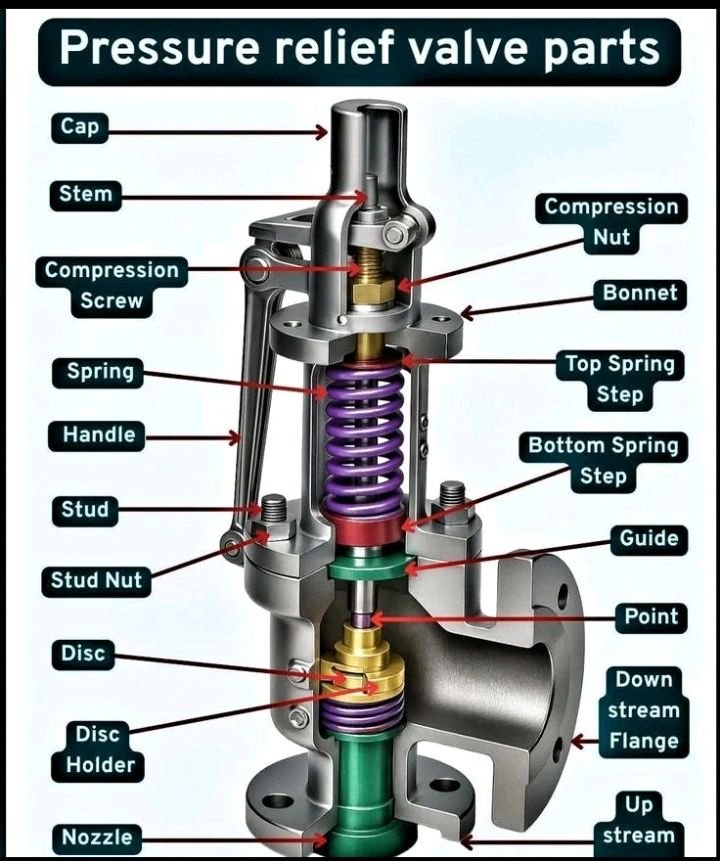
Pressure relief valves are critical safety devices used to protect equipment and piping systems from overpressure conditions. This diagram highlights the key components of a typical spring-loaded pressure relief valve.
Key Components:
- Cap & Compression Screw/Nut – Used to set and adjust the opening pressure.
- Stem & Guide – Ensure smooth and aligned valve movement.
- Spring (Top & Bottom Seats) – Controls valve opening and closing pressure.
- Bonnet – Encloses and protects internal components.
- Disc & Disc Holder – Seals the valve and opens during overpressure.
- Nozzle – Directs process fluid during relief
- Handle & Stud Assembly – Supports operation and maintenance.
- Upstream & Downstream Flanges – Connect the valve to the piping system.
Importance:
✔ Protects equipment from excessive pressure
✔ Enhances plant and personnel safety
✔ Ensures compliance with safety standards
✔ Essential in boilers, pressure vessels, and process industries
Understanding pressure relief valve components helps engineers perform correct selection, installation, and maintenance for safe operations.