
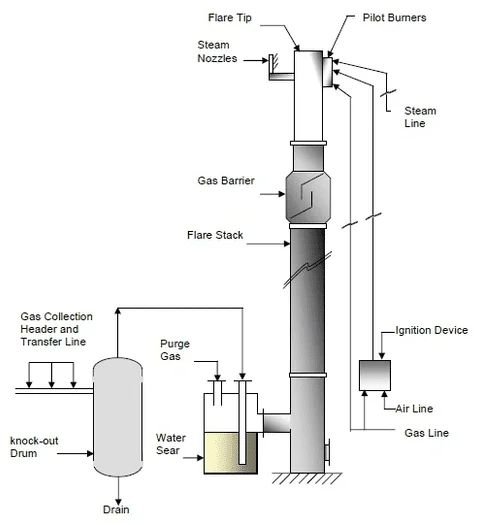
One of the final stages in surface well testing is the Gas Flare system, where excess gas from the process is safely disposed off
What enters?
Gas from the gas scrubber / separator
This gas is mostly dry, with little or no liquid content
What happens inside?
The gas flare system is designed to burn off gas safely.
Here’s what happens:
Gas flows through the flare line to the flare stack
At the tip, a pilot flame is always on
When gas reaches the flare tip, it ignites immediately
The gas burns continuously in a controlled manner
This prevents the release of raw hydrocarbons into the environment.
What leaves?
-Burnt gases:
-Carbon dioxide (CO₂)
-Water vapor
-Heat and light (the visible flame)
What controls it?
-Pressure from upstream equipment (separator / scrubber)
-Flare pilot system (ensures continuous ignition)
Control valves regulating gas flow
-Flame arrestor (prevents flame from traveling backward)
Why the Gas Flare is Important?
-Prevents dangerous gas accumulation
-Ensures safe disposal of hydrocarbons
-Protects equipment and personnel
-Maintains environmental compliance
What I’m learning on site
From field observation, I’ve noticed that:
Gas must be properly cleaned (via scrubber) before flaring
Any liquid carryover can affect flare performance
Stable gas flow gives a better, steady flame
Simple way to understand it
The gas flare is like a safe outlet for excess gas — instead of releasing it into the air, it is burned in a controlled way.