
All drilling performance ultimately depends on bit selection and operation.
A good bit choice can save days of rig time.
Main Types of Drill Bits
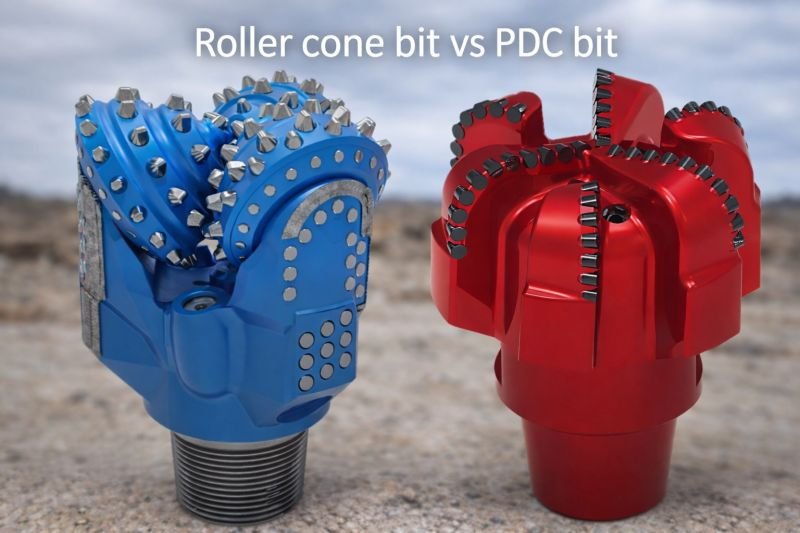
🔸 Roller Cone Bits
Use rotating cones with teeth
Crush and chip the formation
Suitable for soft to medium-hard formations
Types of teeth:
Steel tooth (milled tooth)
Tungsten carbide insert (TCI)
🔸 PDC Bits (Polycrystalline Diamond Compact)
Fixed cutter bits
Shear the rock instead of crushing
High rate of penetration (ROP)
Long bit life
Best for:
Shale
Sandstone
Carbonate formations
Bit Design Features
Key design elements include:
Cutter size and shape
Blade count
Nozzle configuration
Hydraulic design
Bit profile
These affect:
ROP
Bit durability
Hole quality
How Drill Bits Are Selected
Engineers consider:
Formation type and hardness
Lithology changes
Depth and pressure
Bit cost vs performance
Historical offset well data
Bit selection is both science and experience.
Role of Drilling Fluid at the Bit
Drilling mud:
Cleans the bit face
Removes cuttings
Cools cutters
Prevents bit balling
Poor hydraulics = poor bit performance.
Common Bit Problems
Bit balling
Cutter wear
Broken teeth
Low ROP
Poor hole cleaning
Most problems are operational, not bit defects.
💡 Question:
In shale formations, why do PDC bits usually outperform roller cone bits?