
We talk a lot about the big machinery (Top Drives, Drawworks), but the real action happens on the rig floor. This is where the drill string is built, connection by connection.
To do this, we rely on three critical pieces of equipment that act as the “hands” of the rig. If these fail, gravity takes over, and the pipe falls down the hole.
Here is how the team works:
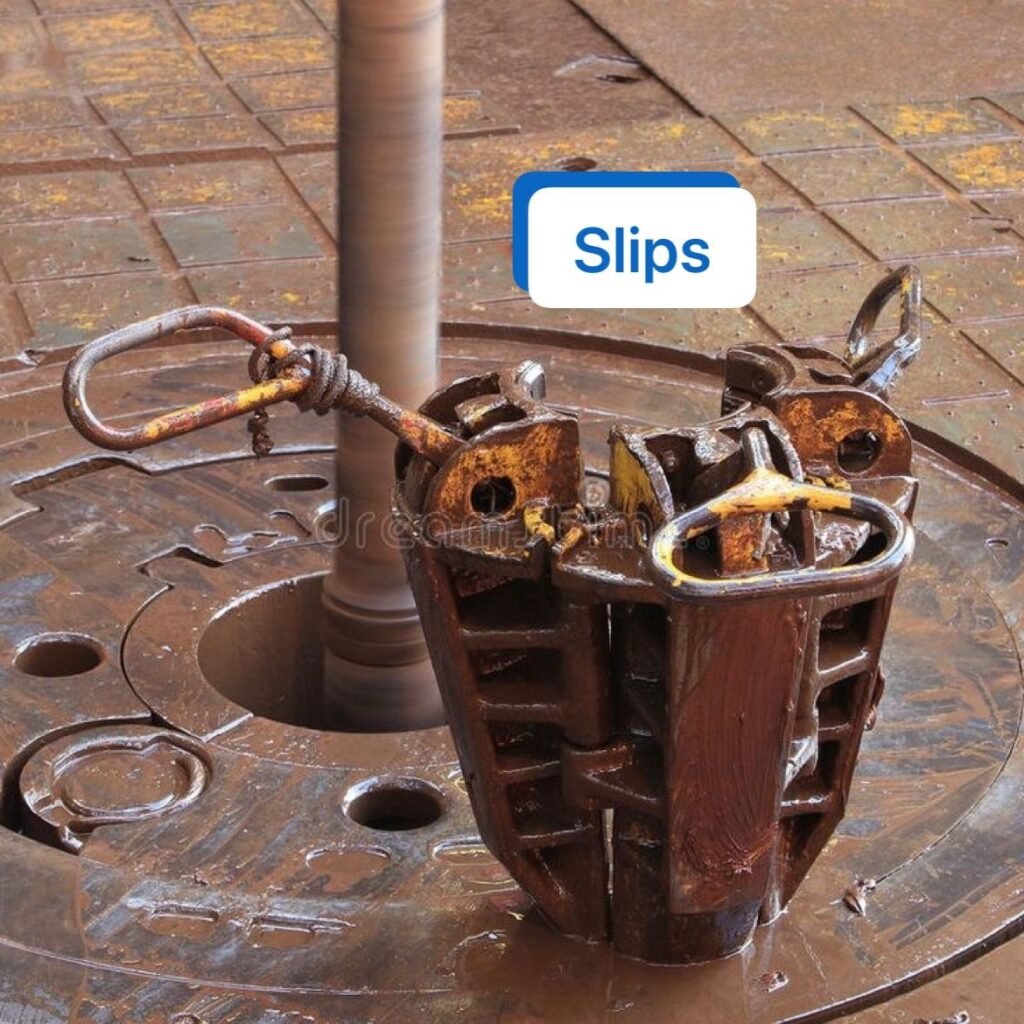
- The Slips (The Holder)
Imagine trying to hold a 20,000 ft steel straw from falling into a hole. You can’t just grab it.
- What they are: Metal wedges with jagged “teeth” (dies) on the inside.
- How they work: They are placed into the Rotary Table bowl around the drill pipe. As the pipe is lowered, the slips are pulled down, wedging tighter and tighter against the pipe.
- The Physics: The heavier the string, the tighter they grip. They transfer the entire weight of the drill string to the rig floor structure.
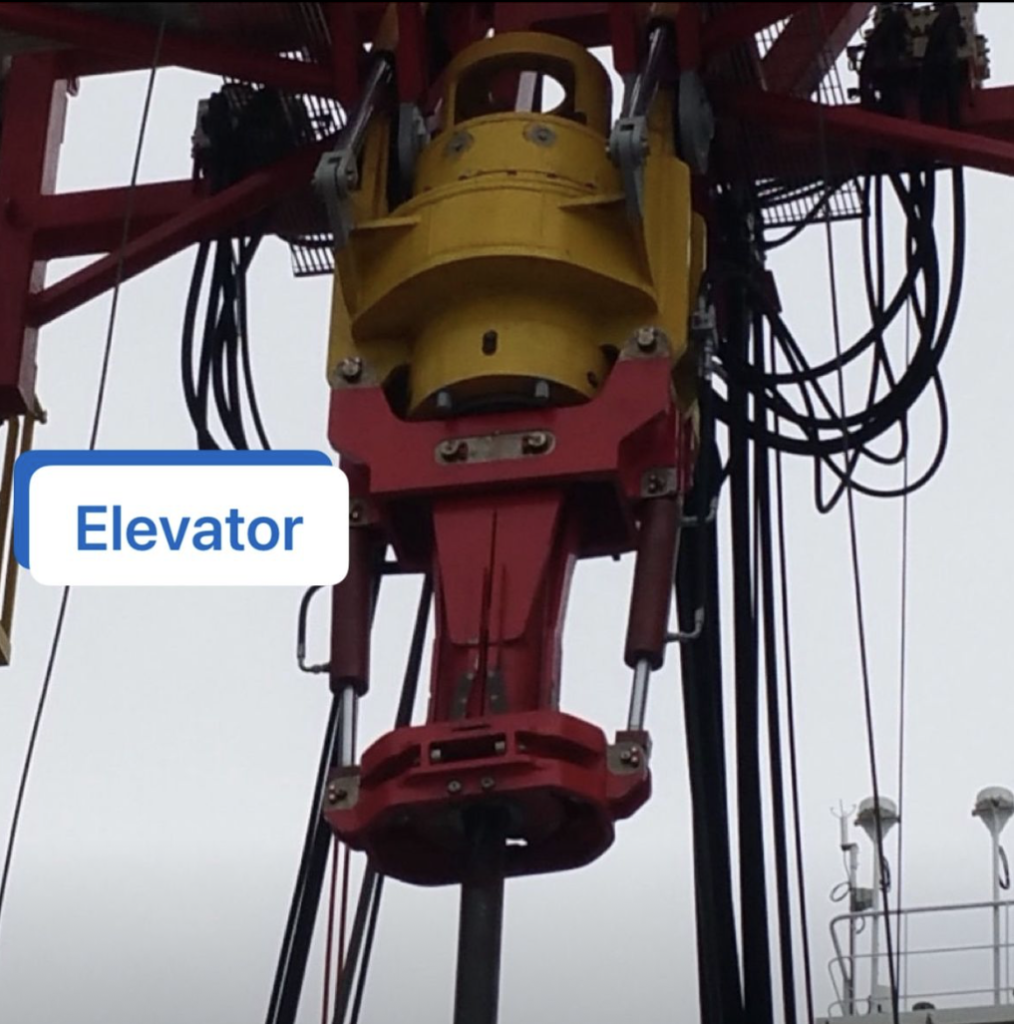
- The Elevators (The Lifter)
Once the slips are holding the pipe, we need a way to pick up the next stand of pipe to screw it on.
- What they are: Heavy-duty hinged clamps attached to the Traveling Block by huge steel links (bails).
- How they work: The derrickman or roughneck latches them around the collar of the pipe. When the block goes up, the elevator shoulders against the pipe connection and lifts it.
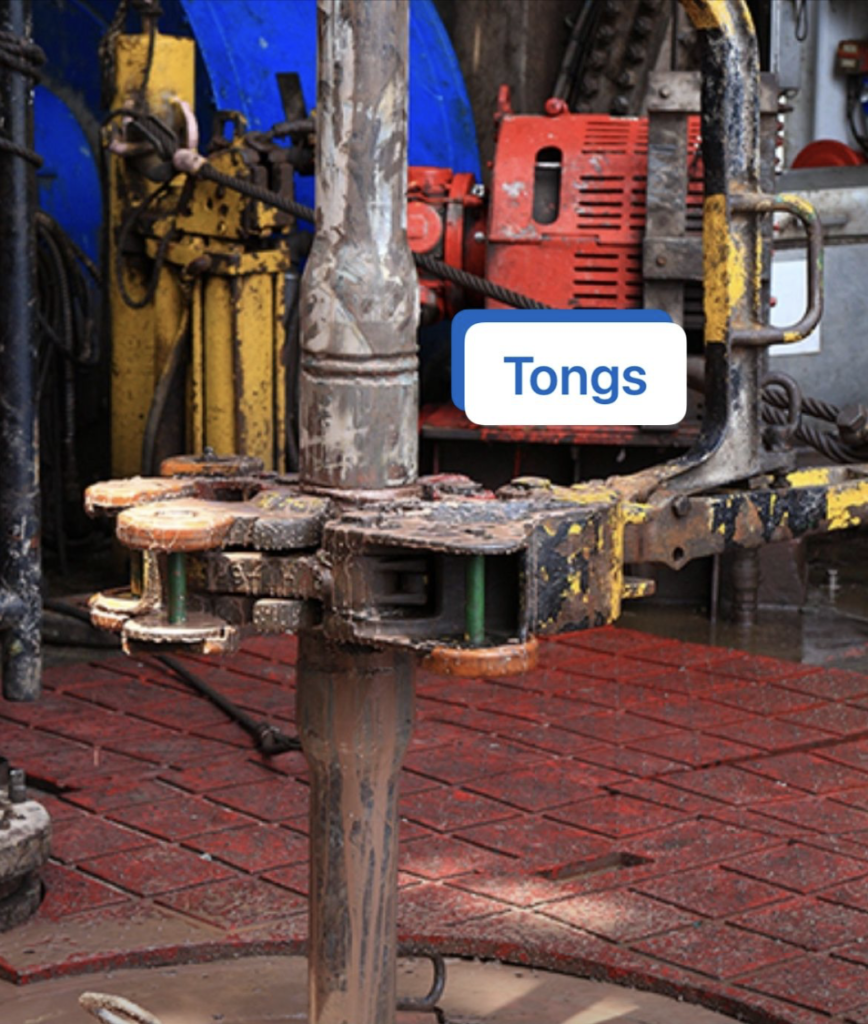
- The Tongs
Now we have the string hanging in the slips and a new joint hanging in the elevators. We need to screw them together.
- What they are: Giant wrenches.
- How they work: We typically use two sets:
- Backup Tongs: Hold the pipe in the slips still.
- Lead Tongs: Grip the new pipe and rotate it to apply the correct “Torque.”
- Iron Roughnecks: On modern rigs, these dangerous manual tongs are replaced by a robotic machine called an “Iron Roughneck” that does it all automatically.