
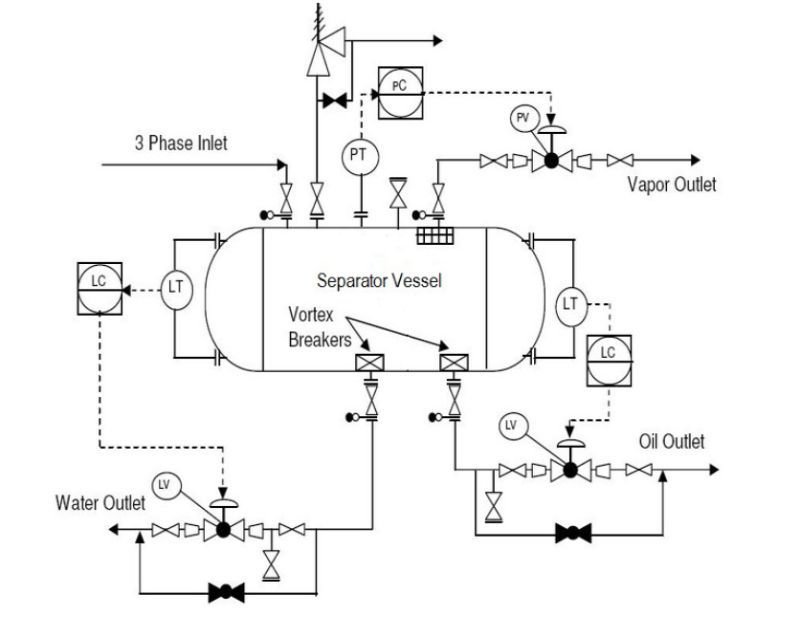
To troubleshoot a three-phase separator, conduct thorough equipment and instrument inspections, check the automation and control system, ensure correct operating parameters like pressure and temperature are maintained, verify the integrity of internal separation components, and analyze the inlet flow and its distribution.
A common approach is to systematically work through these areas, starting with the most obvious issues like leaks or blockages, before moving to more complex problems with internal components or operating conditions.
PROCEDURES✔
➡️ Equipment & Instrument Inspection
🔸️Physical Checks:
Inspect all valves, pipelines, and accessories for leaks, blockages, or damages.
🔸️Instruments:
Ensure level gauges, pressure gauges, and other instruments are functioning accurately and are properly calibrated.
🔸️Cleanliness:
Clean the separator and its internal components to remove debris that could impede the separation process.
➡️ Automation & Control System Checks
🔸️Level Controls:
Verify that the liquid level and oil-water interface level control systems are sensitive and reliable.
🔸️Pressure Controls:
Ensure the gas zone pressure is within the designed limits to prevent oil carryover into the gas outlet or gas entrainment in the oil outlet.
🔸️System Integration:
Check that all control systems, including those for pressure, level, and flow, and ensure they’re functioning correctly together.
➡️ Operating Parameters
🔸️Operating Conditions:
Confirm that the separator is operating within its design conditions, as conditions outside this range can lead to poor separation.
🔸️Temperature:
Control the incoming fluid temperature, as low temperatures can cause condensation.
🔸️Pressure:
Maintain the appropriate pressure for the mixture state to prevent oil-gas or gas-oil mixing.
➡️ Internal Components & Flow
🔸️Internal Structure:
Evaluate the condition and sizing of internals like the inlet diverter, cyclones, and demisting elements.
🔸️Flow Distribution:
Analyze the inlet flow and its distribution to ensure even flow across the separator internals, checking for issues like excessive inlet momentum.
🔸️Fouling:
Check components like mesh demisters and plate packs for fouling, which can significantly reduce performance.
➡️ Advanced Troubleshooting
🔸️Thermal Imaging:
For uninsulated vessels, thermal cameras can identify solids accumulation or indicate different fluid phases by their temperatures.
🔸️Modeling:
Consider using Computational Fluid Dynamics (CFD) to model inlet flow and vessel gas phase flow for more complex issues.
🔸️Recycle Streams:
Evaluate any recycle streams from downstream units, as “bad oil” streams can negatively impact separation.