
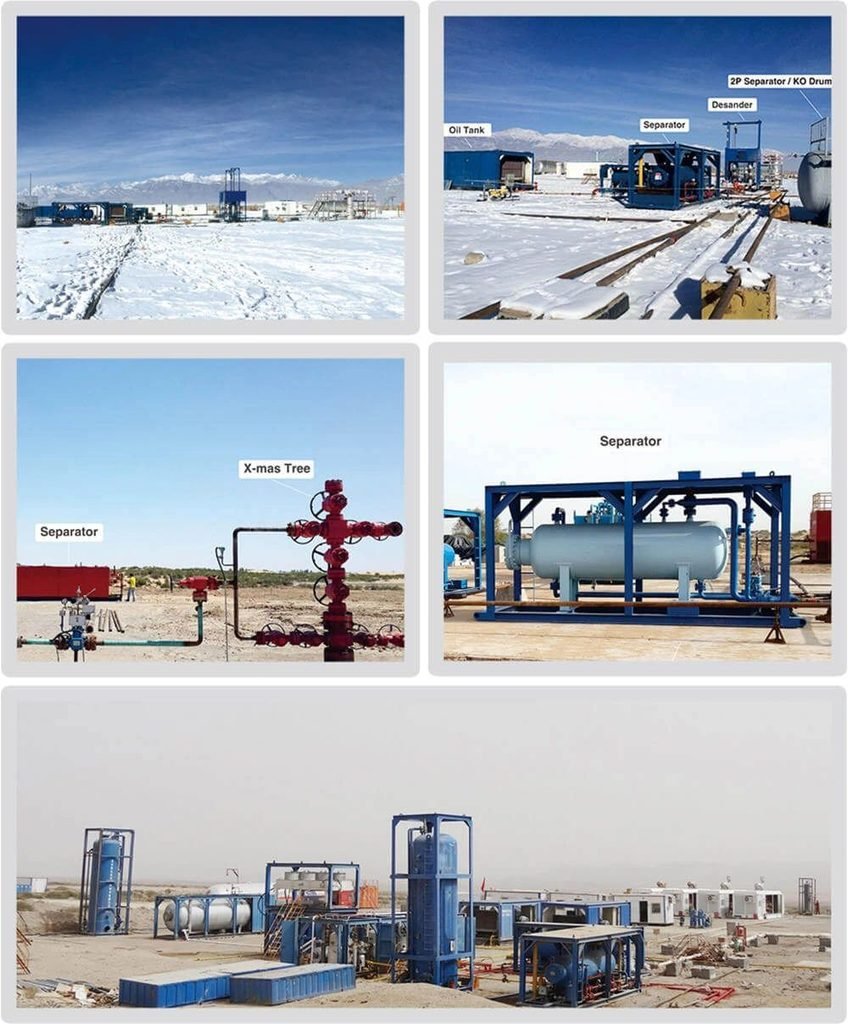
🔗The main objective of SWT is to gather essential data about the reservoir and the fluids it produces to make informed decisions about field development, optimize production strategies, and ensure safety.
This process is vital during both the exploration and development phases of a well’s lifecycle.
📌Key information obtained through SWT includes
1️⃣-Identification of Produced Fluids: Determining the composition and proportions of oil, gas, water, and potentially harmful elements like H2S and CO2
2️⃣-Flow Rates and Pressures: Measuring the rates at which oil, gas, and water flow from the well, as well as the pressure and temperature at various points (wellhead, bottomhole, separator)
3️⃣-Reservoir Characterization: Assessing key reservoir properties such as permeability, pressure, and the extent of the reservoir (boundaries).Well performance evaluation: Determining the well’s deliverability potential and identifying any damage or stimulation effects near the wellbore.
🔗SWT involves rigging up specialized equipment to handle, separate, and measure the produced fluids safely at the surface.
📌Some of the equipments and processes include:
1️⃣ Flow Head: Controls the flow of fluids from the well and allows access for downhole tools.
2️⃣-Choke Manifold: Manages and controls the flow rate and pressure of the well effluent before it enters other processing equipment.
3️⃣-Separator: A pressure vessel that separates the mixed well fluids into three distinct phases: oil, gas, and water, allowing each phase to be measured and sampled accurately.
4️⃣-Measuring Devices and Tanks: Equipment like flow meters, pressure gauges, and surge/gauge tanks are used to monitor and store the separated fluids for accurate measurement and analysis.
5️⃣-Emergency Shutdown (ESD) Systems: Safety systems are crucial to immediately shut in the well in case of overpressure, leaks, or other emergencies.
🔗The data collected during SWT is analyzed to create a detailed picture of the reservoir’s potential and guide future operational decisions.