
When drilling fluid interacts with permeable formations, something important happens.
The liquid portion of the drilling fluid begins to filter into the formation.
This process is known as fluid loss or filtration.
Why does this matter?
Because excessive fluid loss can cause several drilling problems, including:
- Formation damage
- Wellbore instability
- Differential sticking
As filtration occurs, the solids in the drilling fluid begin to deposit on the wellbore wall, forming what is called a filter cake.
A good filter cake should be thin and low permeability, helping to seal the formation and reduce further fluid invasion.
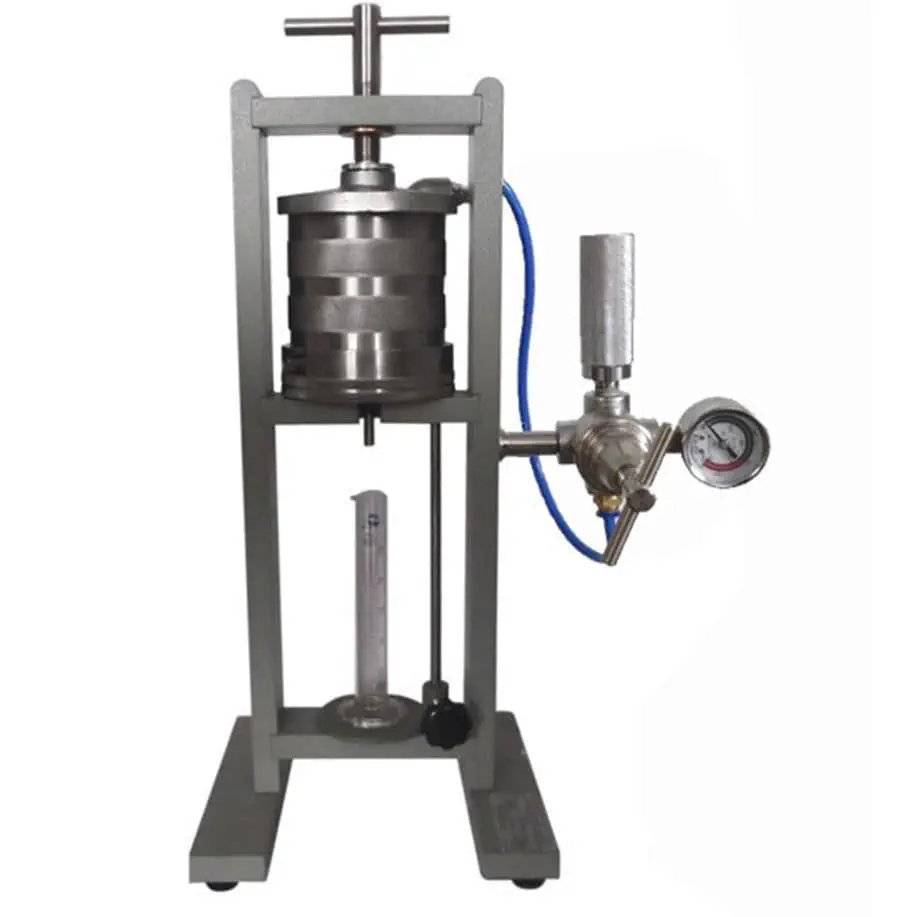
Mud engineers evaluate this property using a laboratory test known as the LPLT (Low Pressure Low Temperature) filter press test.
During my training today, I performed a fluid loss test on bentonite mud using an LPLT filter press, which helped demonstrate how drilling fluids form filter cakes and control filtration.
Understanding filtration behavior is important because it directly affects wellbore stability and drilling efficiency.
Professional insight:
Mud engineers in the field—what filtration characteristics do you usually consider acceptable when evaluating drilling fluid performance?
Food for Thought:
Why do you think a thin filter cake is usually preferred over a thick one?
30 Days of Mud Engineering-Day 1-What Is Drilling
30 Days of Mud Engineering-Day 2-What Is Drilling Fluid
30 Days of Mud Engineering-Day 3-How Does Drilling Fluid Control Formation Pressure
30 Days of Mud Engineering-Day 4-How Do Engineers Determine The Right Mud Weight for a Formation
30 Days of Mud Engineering-Day 6-Mud Weight
30 Days of Mud Engineering-Day 7-Why Must Drilling Mud Flow Properly
30 Days of Mud Engineering-Day 8-What Determines How Drilling Mud Actually Flows Inside The Wellbore
30 Days of Mud Engineering-Day 9-Plastic Viscosity (PV) and Yield Point (YP)
30 Days of Mud Engineering-Day 10-Fluid Loss or Filtration
30 Days of Mud Engineering-Day 11-Retort Test
30 Days of Mud Engineering-Day 12-How Stable Is The Emulsion
30 Days of Mud Engineering-Day 13-Water-Based Mud (WBM) and Oil-Based Mud (OBM)
30 Days of Mud Engineering-Day 14-Shale
30 Days of Mud Engineering-Day 15-Shale Inhibition
30 Days of Mud Engineering-Day 16-KCl–Polymer Mud
30 Days of Mud Engineering-Day 17-What Happens to All the Solids Generated During Drilling
30 Days of Mud Engineering-Day 18-How Do Mud Engineers Remove Unwanted Solids From Drilling Fluid
30 Days of Mud Engineering-Day 19-How Do Mud Engineers Maintain The Right Mud Weight During Drilling
30 Days of Mud Engineering-Day 20-Hole Cleaning
30 Days of Mud Engineering-Day 21-Stuck Pipe (Very High Engagement Topic)
30 Days of Mud Engineering-Day 22-Lost Circulation
30 Days of Mud Engineering-Day 23-Lost Circulation Materials (LCM)
30 Days of Mud Engineering-Day 24-Barite Sag
30 Days of Mud Engineering-Day 25-Gas Contamination
30 Days of Mud Engineering-Day 26-Downhole Temperature Impact On the Drilling Fluids
30 Days of Mud Engineering-Day 27-What Is The Role Of A Mud Engineer
30 Days of Mud Engineering-Day 28-How Dynamic The Role of Mud Engineer
30 Days of Mud Engineering-Day 29-What Skills Are Essential For A Mud Engineer